




Story Behind The Book
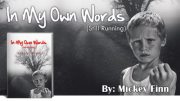
In June 1964, a twelve-year old child was summonsed to appear at Dublin’s Children’s Court. The offence for which he was charged related to an amateurish break-in when coerced and accompanied by older children. In terms of gravity the misbehaviour was hardly more than a prank. In the severe surroundings of that oak panelled court, deep in the bowels of Dublin Castle, Mickey was sentenced to serve Three years hard labour in what was then known as an industrial school. Letterfrack Industrial School to which he was sent is situated in Connemara, one of Ireland’s most isolated regions. For a child its remoteness found its equal only in a Siberian gulag; the likelihood of escape less than that from San Francisco’s notorious Alcatraz Prison. Its seclusion in this malevolent place of correction was a major factor in the institutionalised abuse of children by the Christian Brothers with whom these unfortunate waifs were placed Many of these ill-fated youngsters had not been convicted of any offence; their crime was that they were orphaned; most if not all were victims of dysfunctional family life. During his sentence Mickey, and the hundreds of other children who passed through this den of depravity, were methodically physically and mentally tortured and abused. The Irish State was instrumental in providing this depraved band of brothers with a steady supply of victims. With Taliban-like zeal the Christian Brothers methodically administered random life threatening beatings merely on a whim; the more injurious were witnessed by fellow brothers and many witnessed by other terrified children. Sexual depravity was also the lot of those unfortunate enough to have been sentenced to industrial schools. Today known as Children’s Detention Schools the term industrial school was not as misplaced as might first appear: In essence these children were the indentured slaves of the Republic of Ireland. Children, many as young as four and all under sixteen-years of age, were required to work. The toil was unrelentingly hard manual labour. In many cases it meant being awoken before dawn and worked until dusk. Unsuitably dressed to withstand the elements their labours took them to farms, bogs for the cutting of turf, the husbandry of farm animals including their slaughter, and that of a shepherd. Harvesting, tree removal, wall building, rock-breaking and removal were some of soul-destroying back-breaking tasks set for them. Their labours were invariably accompanied by whippings, kicking, beatings and constant exhortations that they work harder. Punishments were carried out randomly and often without reason on a day to day basis. Our hearts are filled with dread, remorse and sentiment when hearing the poignant ballad The Fields of Athenry. It is a song that describes the misfortune of a young man who having stolen a little corn is transported abroad. Ironically the fields of Athenry are but a short distance away from the fields of Letterfrack but there is no song of that name. Is it because it happened so recently? Is it because it is where the bodies are buried? Many of the unfortunate children who died at Letterfrack Industrial School have no recognised Christian resting place. Is it not time to reflect and perhaps remove from the grave some of Ireland’s darkest secrets? Mickey Finn. mickeyfinn14@gmail.com
Media Links
Reviews
<strong><font size="2" face="Times New Roman"><font size="2" face="Times New Roman"></font></font></strong><p align="left">Finn, Mickey</p> <span style="font-family:'Times New Roman';"><font size="2" face="Times New Roman"></font></span><font size="2" face="TimesNewRoman"><font size="2" face="TimesNewRoman"></font></font><p align="left">IN MY OWN WORDS</p> <em><font size="2" face="Times New Roman"><font size="2" face="Times New Roman"></font></font></em><p align="left">(Still Running)</p> <span style="font-family:'Times New Roman';"><font size="2" face="Times New Roman"></font></span><font size="1" face="TimesNewRoman"><font size="1" face="TimesNewRoman"></font></font><p align="left">In a tightly constructed, well-paced memoir that sits squarely in the tradition of Dickens and Frank</p> <p align="left">McCourt, Finn recounts the brutal experience of his confinement in Ireland’s Letterfrack Industrial School, an</p> <p align="left">institution for juvenile delinquents.</p> <p align="left">Mickey Finn is 12 years old and lives in putrid conditions with his ne’re-do-well father, beloved mother and</p> <p align="left">four siblings. His father’s rampant drinking and gambling quickly turn the family into collateral damage, and they</p> <p align="left">find little relief from a grandmother that never approved of her daughter’s marital choice. When Mickey is</p> <p align="left">implicated in a petty theft, he is shipped off to an isolated ward where he and the other incarcerated boys tend</p> <p align="left">livestock, work in the surrounding bogs and endure violent beatings and sexual assault at the hands of the</p> <p align="left">Christian Brothers.</p> <p align="left">Finn’s story is one of survival—and a compelling one at that—yet he compartmentalizes the experience as one of inevitable darkness</p> <p>wherein its recounting sheds only brief moments of light.<br />KIRKUS INDIE REVIEW.</p>