About
Born in Richmond, Virginia, and carted back and forth between Virginia and Baltimore, I blame my rootless, restless personality on my father. He was and is a traveling salesman with a keen gift of gab, great wit, a ready joke, and could sell white tennis shoes to coal miners.
It was during these sojourns up and down the east coast I soaked up the stories that would later be Tobacco Sticks and Mica Highways. I think authors should exploit their family history before raping the rest of the culture for material.
Dad finally got tired of the east and moved to the Midwest when I was fourteen. We settled outside of Chicago. It is here I came of age and went off to college for seven years -- two degrees and one novel later I returned to Chicago and lived in many different apartments, trying to get a little two hundred page manuscript called Ripples published.
When a local printer said he would take a chance on my book, I jumped and had my first novel published by a man who had never published anything. Great reviews and moderate sales put me back to my jobs as a janitor, baker, waiter, construction worker, teacher, real estate tycoon, mortgage broker, professor, security guard, salesman -- anything to make a buck and keep writing. The printer lost his mind and published my second novel, too. That landed me with Bantam after some rave reviews and a paperback auction for my second novel, Tobacco Sticks.
A third novel, Mica Highways, was sold on less than one hundred and fifty pages to Bantam and then I did a strange thing -- I settled down to writing in Ernest Hemingway's birthplace in Oak Park, Illinois. I have since been looking for the Great American Novel up in the old red oak rafters and I think I might have finally found one... we'll see.
Description
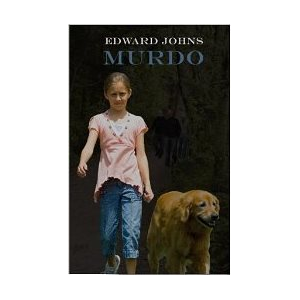
<p>When Jessica Bryant pesters her wealthy parents to allow her to have a dog as a pet, the answer is a resounding "No"; but they soon come to regret their decision when thier home is broken into one evening whilst they are out and their daughter kidnapped and held for ransom. The kidnappers, in the form of four seedy and incompetent characters wearing Disneyland-type masks, take her hostage and keep her incarcerated in a place from which there appears to be no escape. However, they reckon without the resourcefulness of our heroine, and the courage of a wonderful stray dog who comes to her aid and whom she names 'Murdo'. And so begins an exciting and humurous accounting of the couples' adventures together as they consistently foil and outwit the abductors whilst on the run together.<br /> This is a lovely story of the friendship between a girl and a dog, bringing out themes of responsibility, camaraderie, redemption, salvation and self-sacrifice. It includes some wonderful dialogue sequences as Jessica teaches her new four-legged friend how to communicate with her, with additional delightful conversations between the animals when a rabbit and a sparrow join forces with them in an effort to outwit the kidnappers and restore Jessica safely back to her parents' home. </p>
Story Behind The Book
It is a complicated thing where one chooses to write. I have written in store rooms, basements, bedrooms, attics, spaces over garages, cottages, buttonhole apartments and just about every coffee house in America. Maybe a criteria would be as simple as a place where one can be lost and no one will notice the man in the corner scribbling or typing or reading or just staring into blank space. There is nothing holy about one space over another, but there must be anonymity of the sort that allows the writer to become whoever he or she wants for that time.
I found Hemingway’s attic simply by asking a woman if she had any space in her house. The house turned out also to be where Ernest Hemingway was born.I'd like to say there was a grand design, but it really was just that a new baby and a strange windy March day drove me out to a coffee house. It was on the way back that I saw the sign, took the tour, then took a shot and asked if there was any space available. It was really that simple. There were some evaluations of my books, but I don't think there was anything particularly Hemingway about my prose that opened the door. I was really at the right place at the right time. And so the strange ritual of ascending stairs to a musty old attic was born.
That was about ten years ago, and while I write other places as well -- I do have an office over a garage that I share with the exhaust and the occasional field mouse -- the attic is a touchstone, a place where one gets a glimmer of another time, maybe a simpler time, I don't know. But certainly, once I am there, and settled into my stiff-backed chair, I hear the squirrels chattering in the eaves and stare at the church in the distanced over the rooftops -- I am very far away, at least for an hour or two.
NPR Interview in Hemingway's Attic