

Glenn Trust

Glenn Trust

About

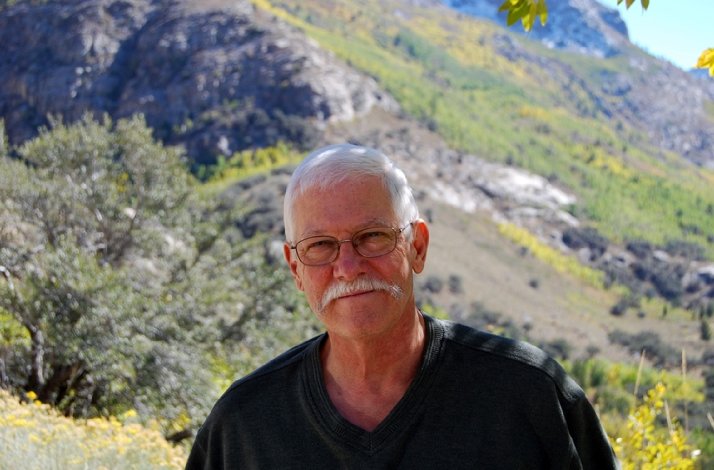
A native of the south, I was born in Columbus, Georgia in 1951, the first of five children.

My father’s work as a salesman filled my early years with moves from the banks of the Chattahoochee River in Georgia to Philadelphia, Los Angeles, Petersburg, Virginia and Baltimore, until finally returning to the Atlanta area in 1965. From then on, I remained a Georgian, going to school and growing up in the Atlanta area.

Varied work and life experiences have given me an appreciation for the virtues and faults of people at all levels of society. For the record, I love people. I find them interesting, all of them. I may not like all of them, but like is different than love. I am fascinated by people.

I have worked alongside laborers, scuffled with bad guys, and stood beside presidents at corporate events. I believe that this exposure to such disparate groups exerts a strong influence on my writing. Hard working construction laborers, truck drivers, and farmers fill the pages alongside rural deputies, big city cops, small town politicians and corporate bigwigs in leather chairs, filling boardrooms with their egos. People are truly interesting, at all levels of society.

Respecting the strengths of people and understanding of their human frailties, my desire above all else in writing is to bring life and reality to the characters in my stories. I hope to expose readers…you…in a real way to a side of life and our society with which you may not be familiar.

I hope my characters possess an honest simplicity and grittiness. The white hats the heroes wear are spotted and grayed by their own demons and struggles. The bad guys are not always misunderstood Robin Hoods. Sometimes they are just truly bad with no possibility of social redemption. In the end, the stories are fiction, about fictional people. I can only hope to bring a believable reality to the characters that populate the pages.

Like real people, the characters I try to paint are not completely good and rarely completely evil. Like most of us, they lie somewhere in between.

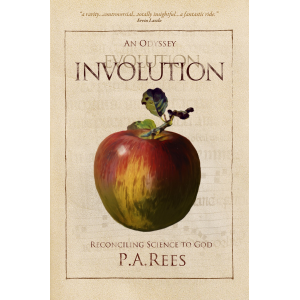
Involution-An Odyssey Reconciling Science to God

Involution-An Odyssey Reconciling Science to God

0.0
0 ratings

Description

<p>“<em>We are not human beings having a spiritual experience; we are spiritual beings having a human experience.”(</em>Teilhard de Chardin<em>)</em></p><p><span style="line-height:1.6em;"><em>Involution-An Odyssey Reconciling Science to God </em> is as layered as a French cassoulet, as diverting, satisfying and as rich. Each reader will spoon this book differently. On the surface it seems to be a simple and light-hearted poetic journey through the history of Western thought, dominantly scientific, but enriched with painting and music. Beneath that surface is the sauce of a new evolutionary idea, involution; the informing of all matter by consciousness, encoded and communicating throughout the natural world. A book about the cathedral of consciousness could have used any language to paint it, but science is perhaps most in need of new vision, and its chronology is already familiar.</span></p><p><span style="line-height:1.6em;">The author offers a bold alternative vision of both science and creation: she suggests that science has been incrementally the recovery of memory, the memory of evolution/involution</span><em style="line-height:1.6em;">.</em></p><p>“<em> Involution proposes that humans carry within them the history of the universe, which is (re)discovered by the individual genius when the time is ripe. All is stored within our DNA and awaits revelation. Such piecemeal revelations set our finite lives in an eternal chain of co-creation and these new leaps of discovery are compared to mystical experience</em>” (From a reviewer)</p><p>Each unique contributor served the collective and universal return to holism and unity. Thus the geniuses of the scientific journey, like the spiritual visionaries alongside, have threaded the rosary of science with the beads of inspiration, and through them returned Man to his spiritual nature and origin.</p><p><span style="line-height:1.6em;">The separation between experience and the rational intellect of science has, by modelling memory as theory, separated its understanding from the consciousness of all, and perceives mind and matter as separate, God and Man as distinct. This work is a dance towards their re-unification: Saints and scientists break the same bread.</span></p><p><span style="line-height:1.6em;">All of time and all the disciplines of science are needed for the evidence. Through swift (and sometimes sparring) Cantos of dialogue between Reason and Soul, Philippa Rees takes the reader on a monumental journey through the history of everything – with the evolution of man as one side of the coin and involution the other.  The poetic narrative is augmented by learned and extensive footnotes offering background knowledge which in themselves are fascinating. In effect there are two books, offering a right and left brain approach. The twin spirals of a DNA shaped book intertwine external and internal and find, between them, one journey, Man’s recovery of Himself., and (hopefully) the Creation’s recovery of a nobler Man.</span></p><p><span style="line-height:1.6em;">From the same review “</span><em style="line-height:1.6em;">The reader who finishes the book will not be the same as the one who began it. New ideas will expand the mind but more profoundly, the deep, moving power of the verse will affect the heart.</em></p><p><em>(Marianne Rankin: Director of Communications, Alister Hardy Trust)</em></p><p> </p>

Story Behind The Book

Some have asked where the idea for “Eyes of the Predator” came from. I was 14 years old and living in Atlanta in 1965. The City was rocked by the abduction and presumed murder of a young newlywed (you can search it easily, but I prefer not to mention her name here) at Lenox Square a large shopping center that is now a huge upscale mall in the Buckhead area. Although her body was never found, her bloodstained car was. The incident was covered repeatedly in the media for months. You have to remember, this was a different world. Mothers still left their babies in strollers outside stores while they went in and shopped. It dd not occur to anyone that someone would harm a child, or for that matter a young newlywed walking across a parking lot. Atlanta was truly traumatized by the disappearance of the young woman. No one had ever heard of Ted Bundy or John Wayne Gacy. I remember that even in school, teachers and students were in shock that such an occurrence could happen in 1965 Atlanta,which was then still somewhat a quiet, backwater city. In short it made a deep impression on the mind of a lot of people, including me, and the idea that people could just disappear permanently was deeply disconcerting. In the seventies and eighties I was policing in the Atlanta area, DeKalb County to be exact. Periodically, someone, almost always a young woman would disappear from some parking lot. The end was never good for them. Met some very bad people, almost always men and witnessed the ongoing patterns of abuse responding to domestic violence calls. I became aware in a very real way that some people live lives of terror and fear right under our noses. I also became aware of the fact that there are human predators in the world. Like other predators, they seek weakness and vulnerability in their victims and the opportunity to exercise their will. I also learned that for many, if not most, the driving motivation behind their terrible acts is power, the ability to inflict pain on others. Sex for many of these predators is secondary and another way of controlling and inflicting pain. I realize that “Eyes of the Predator: The Pickham County Murders” may be a bit intense for some readers. I apologize for this. It tells a true story, not a real one. By that I mean the story is not based on any single case or event. It is a composite sketch of predators and their victims. An additional parallel plot in the book is the parental abuse of the main female character. Again this plotline is true but not real. It is intended to paint a picture of abuse within a family but does not represent any particular family. In any event, I realize the story is somewhat dark. Truth be known, I found writing some of the passages to be deeply disturbing but as the characters acted out on my computer screen they took on their own lives and acted for themselves. I simply recorded the action as I saw it. I hope you enjoy the story. In the end, that is all that it is. If there are lessons to be learned, maybe we can all learn them.

Reviews