About
Archer Swift lives in the beautiful city of Melbourne, Australia. The author of several other books, under various nom de plumes, Archer loves taking his readers into new worlds in which they discover a little more about themselves.
Fascinated by the themes of coming of age, intrepid courage, betrayal and forgiveness, reluctant heroism, and the reverberating emotions of young love and parental loss, Archer Swift plunges his characters into desperate life-and-death struggles for survival. And just when it seems that things cannot possibly get worse, they do. Yet, as in true life, character is born in the furnace of adversary. In the face of insurmountable odds, we find our destiny.
Having worked as a relief-aid worker and family counsellor in several countries, he has an insightful perspective on the base motivations of young and old, the consequences that arise through thoughtless and self-serving choices, and the heroism that often emerges from the least likely of sources.
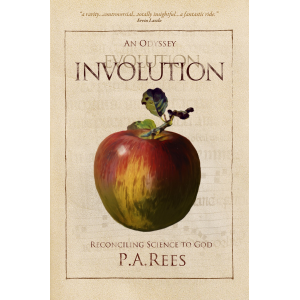
Involution-An Odyssey Reconciling Science to God
Description
<p>“<em>We are not human beings having a spiritual experience; we are spiritual beings having a human experience.”(</em>Teilhard de Chardin<em>)</em></p><p><span style="line-height:1.6em;"><em>Involution-An Odyssey Reconciling Science to God </em> is as layered as a French cassoulet, as diverting, satisfying and as rich. Each reader will spoon this book differently. On the surface it seems to be a simple and light-hearted poetic journey through the history of Western thought, dominantly scientific, but enriched with painting and music. Beneath that surface is the sauce of a new evolutionary idea, involution; the informing of all matter by consciousness, encoded and communicating throughout the natural world. A book about the cathedral of consciousness could have used any language to paint it, but science is perhaps most in need of new vision, and its chronology is already familiar.</span></p><p><span style="line-height:1.6em;">The author offers a bold alternative vision of both science and creation: she suggests that science has been incrementally the recovery of memory, the memory of evolution/involution</span><em style="line-height:1.6em;">.</em></p><p>“<em> Involution proposes that humans carry within them the history of the universe, which is (re)discovered by the individual genius when the time is ripe. All is stored within our DNA and awaits revelation. Such piecemeal revelations set our finite lives in an eternal chain of co-creation and these new leaps of discovery are compared to mystical experience</em>” (From a reviewer)</p><p>Each unique contributor served the collective and universal return to holism and unity. Thus the geniuses of the scientific journey, like the spiritual visionaries alongside, have threaded the rosary of science with the beads of inspiration, and through them returned Man to his spiritual nature and origin.</p><p><span style="line-height:1.6em;">The separation between experience and the rational intellect of science has, by modelling memory as theory, separated its understanding from the consciousness of all, and perceives mind and matter as separate, God and Man as distinct. This work is a dance towards their re-unification: Saints and scientists break the same bread.</span></p><p><span style="line-height:1.6em;">All of time and all the disciplines of science are needed for the evidence. Through swift (and sometimes sparring) Cantos of dialogue between Reason and Soul, Philippa Rees takes the reader on a monumental journey through the history of everything – with the evolution of man as one side of the coin and involution the other. The poetic narrative is augmented by learned and extensive footnotes offering background knowledge which in themselves are fascinating. In effect there are two books, offering a right and left brain approach. The twin spirals of a DNA shaped book intertwine external and internal and find, between them, one journey, Man’s recovery of Himself., and (hopefully) the Creation’s recovery of a nobler Man.</span></p><p><span style="line-height:1.6em;">From the same review “</span><em style="line-height:1.6em;">The reader who finishes the book will not be the same as the one who began it. New ideas will expand the mind but more profoundly, the deep, moving power of the verse will affect the heart.</em></p><p><em>(Marianne Rankin: Director of Communications, Alister Hardy Trust)</em></p><p> </p>
Story Behind The Book
My love for all things sci-fi and weakness for coming-of-age dramas combined in a moment of inspiration. In a wild thirty minutes late one night, I scribbled down the first chapter, and a week later the first draft was complete. Two weeks later, I had the entire trilogy mapped out (not written, but conceptualized in a thousand-odd post-it notes).
Then routine kicked in: sweat, hard work, and tears from red-rimmed eyes. Fourteen months(!) later the first book, Dawn, was complete, and I'm presently working through the final draft of book two, Noon. (Due: end of 2014).
Inspiration and routine -- necessary partners in crime.
Reviews
<p>From the opening scene, I fell in love with this story. Although it's set in a dark and menacing context, a merciless planet post-Earth where all sorts of creatures prey on the dwindling human population, this book is written with a clean spirit. That is to say, the message of this story (and all stories contain a message) isn't dark or sinister. Rather, anchored in the human condition, it's a story pregnant with hope and one that is deeply inspirational. For all the battles our protagonist faces, his greatest battleground lies within. And while the setting is distinctly otherworldly, the emotions that are brought to the surface are grounded in this world, making them acutely relevant. This is a core triumph of the book. Despite the outlandish horrors the author inflicts on his characters, he avoids drifting into the proverbial gutter of narcissism, cultural sordidness, and abject despondency so prevalent in YA-lit today. He holds on to that flicker of indefatigable hope.</p>
<p><span style="line-height:1.6em;">The drama is fast-paced, almost relentless at times, yet Archer bleeds in backstory and description with carefully chosen flashbacks and by crafting an intense, deep-thinking protagonist, who is both likeable and real. Unassuming and shy, Ristan Abel's reluctant courage is endearing and will have every reader cheering him on.</span></p>
<p><span style="line-height:1.6em;">And finally, like all good YA novels, Eden, Dawn has an interesting love quadrangle. However, unlike too many young-adult books, the unfolding love story is subtle yet substantial, and adds to rather than detracts from the book. This is not gush to spice up a weak storyline; this is awakened feelings born out of desperation, survival and friendship woven into character development and a robust plot.</span></p>
<p><span style="line-height:1.6em;">Readers with an eye to see will also enjoy Archer’s light-versus-dark symbolism that often seeps into his description of the planet, times of the day, and the weather, giving the tale a high-strung edge. Through each chapter, you’re left with a sharp sense of the protagonist’s daily struggle for life and sanity. In short, </span><em style="line-height:1.6em;">Eden, Dawn</em><span style="line-height:1.6em;"> is brooding, poignant and full of feeling, a must-read for fans of young-adult lit and science-fiction thrillers.</span></p>
<p><span style="line-height:1.6em;">-- Susan Collins</span></p>