About
Marilynn grew up in a solid Christian home, coming to Christ at the age of 7. She has been actively involved in Church life since age 10, including activities such as joining her Mom and sister in singing special numbers, choir, teaching Sunday School, leading Sunday School open session, planning Sunday School lessons, and more. Marilynn attended both public and private schools growing up. She attended North Island Community College on Vancouver Island and Trend College in Kelowna, obtaining certificates in receptionist work and Comptia A+ computer repair.
Throughout her life, Marilynn has written poetry and published in the American Poetry Anthology(two issues). She currently does freelance work for a technical blog in Alberta. She's also written numerous unpublished articles on end-time eschatology, written unpublished short stories, word studies and more.
Marilynn lives with her two teenagers, cat and gerbil, in Kelowna BC Canada. Her day job sees her fix computers and engage in multimedia for her church. In the evenings and on weekends she's a soundtech doing various events through the year from funerals to workshops to concerts and weddings. Marilynn sings in the choir and sang on her church's praise teams for several years.
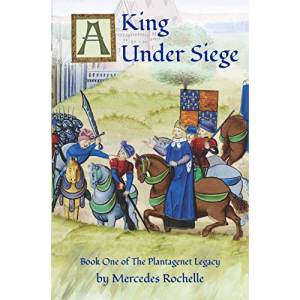
A King Under Siege: Book One of The Plantagenet Legacy
Description
<p>Richard II found himself under siege not once, but twice in his minority. Crowned king at age ten, he was only fourteen when the Peasants' Revolt terrorized London. But he proved himself every bit the Plantagenet successor, facing Wat Tyler and the rebels when all seemed lost. Alas, his triumph was short-lived, and for the next ten years he struggled to assert himself against his uncles and increasingly hostile nobles. Just like in the days of his great-grandfather Edward II, vengeful magnates strove to separate him from his friends and advisors, and even threatened to depose him if he refused to do their bidding. The Lords Appellant, as they came to be known, purged the royal household with the help of the Merciless Parliament. They murdered his closest allies, leaving the King alone and defenseless. He would never forget his humiliation at the hands of his subjects. Richard's inability to protect his adherents would haunt him for the rest of his life, and he vowed that next time, retribution would be his.</p>
Story Behind The Book
Every Fall, my daughter and I head to the local grocery store and buy the biggest, heaviest pumpkin we can dig out of the bin. We bring it home, break it down, which includes boiling as I've never done the roasting method very well, and then proceed to make our pumpkin pie filling.
Due to affordability issues, some parts of the original recipe changed, resulting in a light, not as thick pumpkin pie that people seem to really like. So much so that in recent years, my daughter's friends have been asking how to make it. She dedicated her 18th birthday last year to teaching two of her friends how to make my pumpkin pie.
This year, I decided to share the process with the world!