


About
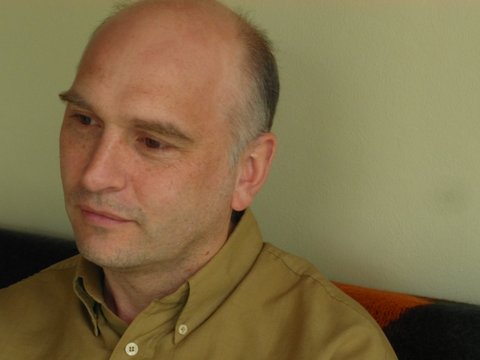
Born to Dutch parents and raised in Colombia and England, I am a rootless wanderer with itchy feet. I've spent the last few years living and working in The Netherlands, Czech Republic, Sudan and Bulgaria, but I have every confidence that I will now finally be able to settle down in cozy old Oxfordshire.
I'm an avid reader and film fan and I have an MA in creative writing for film and television. My current projects include: 'The Ornamental Hermit '- a 19th century mystery (the second in a series of Victorian detective novels featuring DS John Billings) and 'Muchacha!' - a series of novellas depicting the life of Hans and Annie, a young Dutch couple who emigrate to Colombia in the 1970's, and struggle to find themselves a good and reliable maid.
Learning to Breathe Fire: The Rise of CrossFit and the Primal Future of Fitness
Description
<p><b>The absorbing, definitive account of CrossFit's origins, its explosive grassroots growth, and its emergence as a global phenomenon.</b><br /> <br />One of the most illuminating books ever on a sports subculture, <i>Learning to Breathe Fire </i>combines vivid sports writing with a thoughtful meditation on what it means to be human. In the book, veteran journalist J.C. Herz explains the science of maximum effort, why the modern gym fails an obese society, and the psychic rewards of ending up on the floor feeling as though you're about to die. <br /> <br />The story traces CrossFit’s rise, from a single underground gym in Santa Cruz to its adoption as the workout of choice for elite special forces, firefighters and cops, to its popularity as the go-to fitness routine for regular Joes and Janes. Especially riveting is Herz’s description of The CrossFit Games, which begin as an informal throw-down on a California ranch and evolve into a televised global proving ground for the fittest men and women on Earth, as well as hundreds of thousands of lesser mortals. <br /> <br />In her portrayal of the sport's star athletes, its passionate coaches and its “chief armorer,” Rogue Fitness, Herz powerfully evokes the uniqueness of a fitness culture that cultivates primal fierceness in average people. And in the shared ordeal of an all-consuming workout, she unearths the ritual intensity that's been with us since humans invented sports, showing us how, on a deep level, we're all tribal hunters and first responders, waiting for the signal to go all-out. </p>
Story Behind The Book
I spent the winter of 2009 looking after my parents' holiday house in the remote mountains of Southern Bulgaria. Somewhere in the middle of February, after some particularly heavy snow fall, I found myself completely snowed in and without electricity. I was trapped indoors with nothing but tinned food and dry crackers to feed me and a cheap, old, dog eared Wandsworth Classic to occupy my mind.
It was there, cuddled up by the fireside, wrapped in a blanket, reading Wilkie Collins's 'The Moonstone' by candlelight, that I was first inspired to write 'Death Takes A Lover'. It was the perfect setting to enjoy this classic Victorian mystery. Kardjali - a remote and forgotten corner of Bulgaria, abandoned by the young folk, littered with ruined and tumbled down homesteads, where wrinkled old ladies walk up the steep hills with their kerchief'd heads carrying heavy loads of firewood on their backs, or sit cross legged on the ground watching their cows graze the rocky fields, while their husbands drink and gamble their pensions away at the local cafe. Time had come to a standstill there (somehow it had even managed to roll back) and this bleak world of Victorian hardship and inequality which I read about, seemed more relevant to me then than anything I might have otherwise watched on television.
Time had come to a standstill for me too. I was not so young anymore and life had been leading me in the wrong direction. So before my dreams of becoming a writer had been fully frustrated, I decided to stop, take a sabbatical and go on my snowy retreat. So there, in the white and desolate Rhodopi Mountains, stuck in the past, trapped by the weather and by my own longings and yearnings and anxieties about a life half lived, the story was first conceived. It's a story about missing the boat. About hardship and inequality. About working and idling, lusting and yearning. A story about death. A story about love.