About
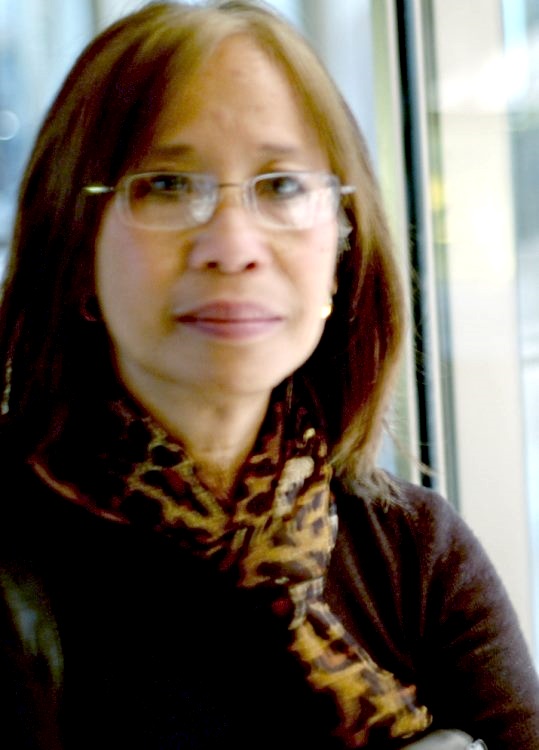
I'm a realist in my writing, as well as my art. I don't have as much imagination as many other writers—a handicap (or strength) that comes partly from my training and experience as a mental health researcher/evaluator and program developer. I'm also a flâneuse—a female observer-wanderer. So, I watch, and observe. And listen. That's where the meat of my writing comes from.
But I’m also a sucker for happy endings. I find enough that depresses me about real life, but seek no catharsis by writing about it. I want escape, entertainment. I don’t strive to enlighten. Not consciously, anyway, but because my previous training has given me a bias, I’m interested in the inner lives of characters, including the passages they go through.
I’m inspired by Jane Austen and Elizabeth Gaskell and their awesome feminist heroines. So, I tend not to rely on broad shoulders and heaving bosoms. Instead, I go into protagonists' thoughts and emotions, their conflicts and their joy, their struggles to reach balance and grow. My novels deal with insecurities and disappointments, love/hate relationships with parents, characters who seem to behave out-of-character, and even life events not typically included in romantic fiction.
I have a book blog here:
and musings on travel, art, and food here: Journey on a Limb
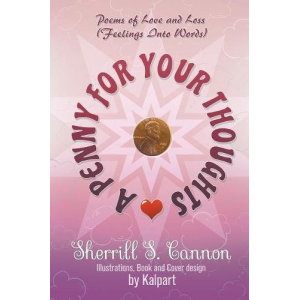
A Penny for Your Thoughts
Description
<p>Have you ever loved, been loved, been confused about love, or suffered from loss of love? All these feelings have been captured and shared in the words of heartfelt poems, compiled over many years by a former teacher and award-winning author.</p><p>Sherrill S. Cannon now shares her thoughts in this book of feelings. "As a teacher, I used poetry to help counsel many troubled teens and friends, and have continued this pattern throughout the years."</p><p>There are three sections in her book: Heads, Spinning, and Tails ... (Love & Loss: Coin Toss?). The variety of lyrical poetry forms include free verse, blank verse, haiku, and sonnets. Some poems are simply plays on words.</p><p><strong>A Sign</strong></p><p>In the depths of my winter</p><p>I heard a small bird -</p><p>Braving the cold,</p><p>Bringing the word.</p><p>He gave my heart hope</p><p>As I heard him sing -</p><p>Three little notes</p><p>Promising spring.</p><p>Sherrill S. Cannon, a former teacher and grandmother of 10, is the author of nine acclaimed rhymed children's stories that have received 48 national and international book awards between 2011 and 2017. Also a playwright with seven published plays for elementary school children, her works have been performed internationally in over 20 countries. Most of her children's books try to teach something, such as good manners and caring for others. Married for 57 years, she and her spouse are now retired, live in Pennsylvania, and travel in their RV from coast to coast, spending time with their children and grandchildren.</p><p><strong>Publisher's website: </strong> http: //sbprabooks.com/SherrillSCannon</p><p> </p>
Story Behind The Book
A consistent thread weaves through most of Gaskell’s books and I believe it stems from her concerns as a woman of her times, when industrialization was changing England radically. But this thread is lost or drowned under the much more vocal voices of the male-oriented society of her time.
A lot of Gaskell’s books bear the names of her heroines as titles. But Charles Dickens, who first published the novel, from which Margaret of the North takes off, thought a shift in focus emphasizing the stark contrasts between North and South England was more appropriate than Margaret Hale; hence, North and South. No doubt he also thought that the new title was more in keeping with the interests of the male-dominated society at the time, concerns that were also regarded as more relevant and important. But I think this change took the focus away from Gaskell’s deep preoccupation with women’s issues (evident in letters she wrote to friends and family), which were then ignored, seen as frivolous or, worse, assumed as nonexistent.
Victorian women generally were pampered and infantilized, their main functions confined to keeping house, bearing children, and being gracious and pretty enough to adorn a man’s image. Gaskell showed me, with at least three characters in North and South—Mrs. Thornton, Margaret, and the maid
Gaskell’s novel has been described as a romance set against a backdrop of occasionally violent strikes as the working class fought for their rights against tyrannical masters. I look at mine as a kind of Victorian feminist bildungsroman (coming-of-age novel) couched in romance.
Reviews
<ul><li>The narrative was tight and strong, and the plots were well thought out and artfully woven together. I am a stickler for grammar and punctuation, and was pleased at the level of editing found here that is rare to find in many Indie published books. <i>Darla Ortiz, Indie Book Reviewer, in Goodreads</i></li>
<li>I wanted to stay forever lost in the pages of this story, never to leave. I love the way E. Journey writes, the words seemed to almost put me in a trance at times! <i>Jhanni Parker, Indie Book Reviewer, in Goodreads</i></li>
</ul>