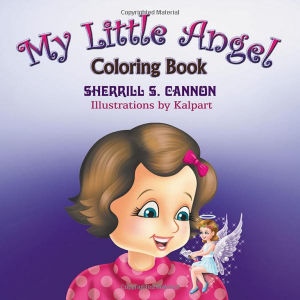
My Little Angel Coloring Book
Description
<p>Does your child have a Guardian Angel?</p><p>Share a day in the life of a little girl whose tiny guardian angel named Angela sits on her shoulder to keep the child safe and guide her through the day.</p><p>Her activities include getting the girl ready for school, crossing the street, being polite and kind to friends, learning her lessons, fastening her seatbelt while traveling, being aware of stranger-danger, praying for her pets, and reminding her constantly that she is loved.</p><p>Once again social values are emphasized in this latest illustrated children's coloring book by award-winning author Sherrill S. Cannon. This is the author's third rhyming children's coloring book.</p><p>Meet many classroom friends from the author's previous books, as My Little Angel Angela guides this child throughout her day.</p><p>The author says, "This book is dedicated to our oldest son, who lost his battle with cancer in August 2021. He is my Special Angel."</p><p><strong>About The Author:</strong> Sherrill S. Cannon is the author of 10 award-winning children's books that have won nearly 100 awards (and counting), including Santa's Birthday Gift, Peter and the Whimper-Whineys, The Magic Word, Gimme-Jimmy, Manner-Man, My Fingerpaint Masterpiece, Mice & Spiders & Webs...Oh My!, The Golden Rule, My Little Angel and David's ADHD, as well as two award-winning poetry books, A Penny for Your Thoughts, and A Dime is a Sign. Her other two coloring books are Peter and the Whimper-Whineys Coloring Book and The Golden Rule Coloring Book. She is also a playwright, with seven published and internationally performed plays for elementary school children. A former teacher, the author's goal in each of her books is to teach good manners as well as caring for others.</p>
Story Behind The Book
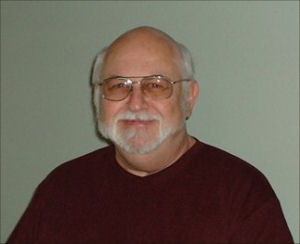
I started writing poetry in 2001 while I was still a professor of microbiology at a medical school. I immediately fell in love with the freedom and creativity inherent in poetry and found it much more enjoyable to write than the scientific writings for research grants, research articles, reports, etc that I had done for years. I have been writing poetry ever since. I like rhyming poetry; Poe and Tennyson are my favorite poets. I also like to tell a more complete story in my poetry. This led to the development of my writing story-poems, which I call storoems. I have become a prolific poet. Poetic Musings of an Old, Fat Man is my third published collection of my poetry since 2003. I like to think I have become a pretty good poet; I was the only poet to have two of his poems win an award in the 2008 Tom Howard Poetry Contest, an international poetry contest in association with Winning Writers, Inc. My storoem, "The Old Salty Poems" won the $1,000 prize for second place, and my free-verse poem "The Assembled Waiters" won $200 for High Distinction. I think that you will find my poetry to your liking if you will give it a chance.