A Penny for Your Thoughts
Description
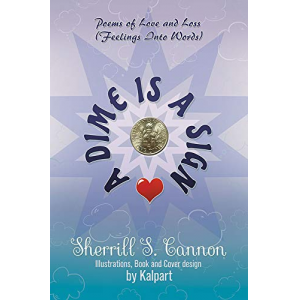
<p>Have you ever loved, been loved, been confused about love, or suffered from loss of love? All these feelings have been captured and shared in the words of heartfelt poems, compiled over many years by a former teacher and award-winning author.</p><p>Sherrill S. Cannon now shares her thoughts in this book of feelings. "As a teacher, I used poetry to help counsel many troubled teens and friends, and have continued this pattern throughout the years."</p><p>There are three sections in her book: Heads, Spinning, and Tails ... (Love & Loss: Coin Toss?). The variety of lyrical poetry forms include free verse, blank verse, haiku, and sonnets. Some poems are simply plays on words.</p><p><strong>A Sign</strong></p><p>In the depths of my winter</p><p>I heard a small bird -</p><p>Braving the cold,</p><p>Bringing the word.</p><p>He gave my heart hope</p><p>As I heard him sing -</p><p>Three little notes</p><p>Promising spring.</p><p>Sherrill S. Cannon, a former teacher and grandmother of 10, is the author of nine acclaimed rhymed children's stories that have received 48 national and international book awards between 2011 and 2017. Also a playwright with seven published plays for elementary school children, her works have been performed internationally in over 20 countries. Most of her children's books try to teach something, such as good manners and caring for others. Married for 57 years, she and her spouse are now retired, live in Pennsylvania, and travel in their RV from coast to coast, spending time with their children and grandchildren.</p><p><strong>Publisher's website: </strong> http: //sbprabooks.com/SherrillSCannon</p><p> </p>
Story Behind The Book
I wrote this book for my friend's son and daughter whom both were fascinated with the tragedy of the Titanic.
This book is written in the spirit of historical fiction. It is based on the anecdotal account of a dog who was on the Titanic and who is said to have - by barking loudly - alerted the rescue ship Carpathia, which at the time was blindly barring down on a lifeboat of survivors drifting in the darkness of the frigid waters of the North Atlantic.
You may find that the style that this story is writen in is a bit unusual. That's because I've written it from Rigel's point of view. He, in fact, is himself the narrator.