About
Ph.D., Administratorof the Pacific North West Institute of the Integrative Body Psychotherapy andAssociate Professor in the Department of Applied Psychology at the Universityof Calgary. Program Design and Development Consultant and contributes and promotesthe Society.
www.theserenityhouse.ca/index.html
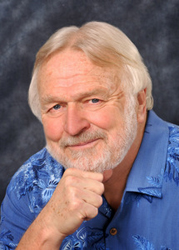
Gerry Fewster is aneducator, writer and psychotherapist. For over twenty years he was ExecutiveDirector of one of Canada’s largest privately operated treatment centers fortroubled children and their families. He has held teaching positions at threeuniversities and is currently Adjunct Associate Professor in the Department ofApplied Psychology at the University of Calgary. Dr. Fewster has writtenextensively on children’s mental health issues and is widely acknowledged forhis contributions to the development of Child and Youth Care across NorthAmerica.
He was the editor ofthe Journal of Child and Youth Care foralmost twenty years and editor of RelationalChild and Youth Care Practice. Dr. Fewster has contributed over fortyarticles to professional journals and published a number of books including, Being in child care: A journey into Self (Haworth,N.Y., 1990) and Ben and Jock: A biography(Oolican, B.C., 2001).
He now lives onVancouver Island where he and his wife Judith direct the Pacific North WestInstitute of Integrative Body Psychotherapy (IBP), one of ten internationalinstitutes dedicated to the advancement of human potential. Together theFewster’s maintain a private practice, specializing in relationship therapy.
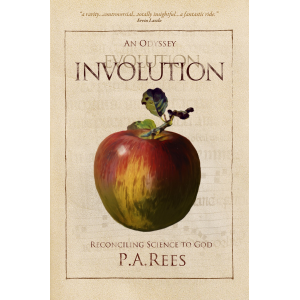
Involution-An Odyssey Reconciling Science to God
Description
<p>“<em>We are not human beings having a spiritual experience; we are spiritual beings having a human experience.”(</em>Teilhard de Chardin<em>)</em></p><p><span style="line-height:1.6em;"><em>Involution-An Odyssey Reconciling Science to God </em> is as layered as a French cassoulet, as diverting, satisfying and as rich. Each reader will spoon this book differently. On the surface it seems to be a simple and light-hearted poetic journey through the history of Western thought, dominantly scientific, but enriched with painting and music. Beneath that surface is the sauce of a new evolutionary idea, involution; the informing of all matter by consciousness, encoded and communicating throughout the natural world. A book about the cathedral of consciousness could have used any language to paint it, but science is perhaps most in need of new vision, and its chronology is already familiar.</span></p><p><span style="line-height:1.6em;">The author offers a bold alternative vision of both science and creation: she suggests that science has been incrementally the recovery of memory, the memory of evolution/involution</span><em style="line-height:1.6em;">.</em></p><p>“<em> Involution proposes that humans carry within them the history of the universe, which is (re)discovered by the individual genius when the time is ripe. All is stored within our DNA and awaits revelation. Such piecemeal revelations set our finite lives in an eternal chain of co-creation and these new leaps of discovery are compared to mystical experience</em>” (From a reviewer)</p><p>Each unique contributor served the collective and universal return to holism and unity. Thus the geniuses of the scientific journey, like the spiritual visionaries alongside, have threaded the rosary of science with the beads of inspiration, and through them returned Man to his spiritual nature and origin.</p><p><span style="line-height:1.6em;">The separation between experience and the rational intellect of science has, by modelling memory as theory, separated its understanding from the consciousness of all, and perceives mind and matter as separate, God and Man as distinct. This work is a dance towards their re-unification: Saints and scientists break the same bread.</span></p><p><span style="line-height:1.6em;">All of time and all the disciplines of science are needed for the evidence. Through swift (and sometimes sparring) Cantos of dialogue between Reason and Soul, Philippa Rees takes the reader on a monumental journey through the history of everything – with the evolution of man as one side of the coin and involution the other. The poetic narrative is augmented by learned and extensive footnotes offering background knowledge which in themselves are fascinating. In effect there are two books, offering a right and left brain approach. The twin spirals of a DNA shaped book intertwine external and internal and find, between them, one journey, Man’s recovery of Himself., and (hopefully) the Creation’s recovery of a nobler Man.</span></p><p><span style="line-height:1.6em;">From the same review “</span><em style="line-height:1.6em;">The reader who finishes the book will not be the same as the one who began it. New ideas will expand the mind but more profoundly, the deep, moving power of the verse will affect the heart.</em></p><p><em>(Marianne Rankin: Director of Communications, Alister Hardy Trust)</em></p><p> </p>
Story Behind The Book
Stop drugging our kids
Author Dr Gerry Fewster PhD "Don't Let Your Kids be Normal – A Partnership for a different world" releases his new controversial book encouraging Professionals to stop drugging our children.
Across North America and Europe youngsters are being tagged and labelled as 'problems' and subjected to the remedial devices of the experts and the pharmaceutical companies. The statistics are staggering. We are now at the point where even babies and toddlers are being treated for depression, disobedience, anxiety, attachment disorders, hyper-activity and an escalating list of syndromes invented to let parents off the hook.
Fewsters new book "Don't Let your kids be Normal" contends that current parenting, teaching and professional practices are generally ineffective and repressive. Encouraging, or coercing children to follow in our footsteps is the worst possible option.
Reviews
If every person who cared for a child read this book, the world would be
a better place. In his classic and powerful way Fewster takes us inside
the life of a child, our own and others, and provides invaluable
insight into how to understand and be with children. His life long
commitment to valuing and knowing children is evident from page to page
as is his ability to mirror back his experience of the lives and moments
of childhood. With knowledge accumulated over years of experience and
study, wit, and incredible examples, Fewster has created a masterpiece
that eliminates once and for all parenting stereotypes and the idea of
adults doing something to children. Parents and helping professionals
with this information at hand, an understanding of their own experience,
and the will to be care givers and receivers will undoubtedly be even
better after reading the book. We should use it in our classes and our
homes.
<br /><br />Mark Krueger
<br />Professor of Youth Work
<br />University of Wisconsin Milwaukee