
- Author
- Book
- Story behind the book
- Media Links
- Reviews
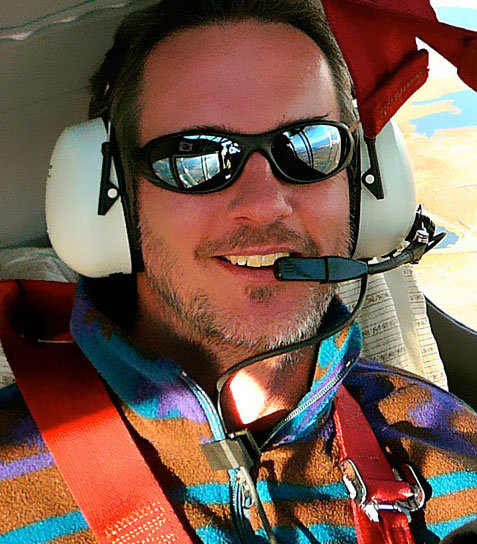
Michael Hicks
About
I suspect that the roots of my writing career actually began early in my elementary school years, when I got to sleep over at my grandparents’ place on the weekends. After Grandma and Grandpa went to bed, I would stay up until all hours watching movies like The Blob, The Abominable Doctor Phibes, and Forbidden Planet. At home during the day, I was glued to TV series like Star Trek, Lost In Space, and Space: 1999, along with every war movie and series I could sneak in behind Mom’s back (Dad feigned ignorance, bless his soul). And lest you think I did nothing but watch the tube, I spent far more time reading every sci-fi and horror book I could get my hands on. In my teens I was so addicted to reading that my teachers had to yell at me in class to get my nose out of a book with spaceships and aliens emblazoned on the cover and pay attention to my “education.” Oh, the pain.
However, like the braces I wore on my teeth, the pain did eventually begin to pay off when I first put pen to paper when I was a senior in high school. The stories I began to concoct weren’t for a class; I was simply compelled to write to express the first yearnings of my muse. Looking back now on those rushed scrawls, I’m rather glad no one else has ever read them. Not that anyone could, so bad was my handwriting. I should have been a doctor, specializing in writing prescriptions.
Poor penmanship aside, I kept dabbling, and eventually one of the stories I sketched out turned into the draft of the first three novels of the In Her Name series – Empire, Confederation, and Final Battle – which I drafted between 1991 and 1994. At that time it was actually a single tome, now sold as the In Her Name Omnibus, and I shouldn’t have been surprised at any of the rejection letters I received from publishers: the manuscript was so huge that any editor trying to lift it would have been at risk for a hernia.
The omnibus draft sat under my desk until 2008, when I took advantage of the eBook revolution and published it on the Amazon Kindle, receiving a delightful shock when people not only began buying it, but actually liked it. The writing itself has been an enjoyable compulsion, but hearing that readers enjoy what I write has been a true and treasured gift.
As for my personal information, I was born in 1963, although I’m quite certain I’ve never matured beyond the age of ten (at least according to my wife and parents). I grew up in Scottsdale, Arizona, and still harbor many fond memories of exploring the open desert just beyond our doorstep before the landscape was replaced with endless developments and shopping malls.
After receiving a Bachelor of Arts degree from Arizona State University and being commissioned in the Army, I moved to Maryland in the mid-1980s to play a terribly minor role in defending the free world from the Soviet Empire. In fact, I spent a summer in the Soviet Union in 1983 just after Leonid Brezhnev was dipped in formaldehyde, and had a wonderful time in a very magical but tragic land.
Last, but certainly not least, I’m married to the most wonderful woman in the world and got two awesome stepsons as a bonus, with all of us serving the needs of our two Siberian cats. We spend as little time at home as we can manage, preferring instead to be out on the road in our RV, seeing as much of North America as we can. That’s where I am now, working on my next book…
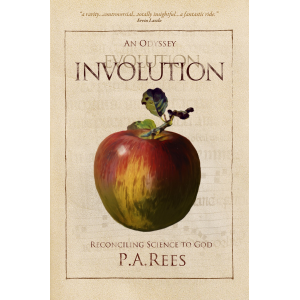
Involution-An Odyssey Reconciling Science to God
0.0
0 ratings
Description
<p>“<em>We are not human beings having a spiritual experience; we are spiritual beings having a human experience.”(</em>Teilhard de Chardin<em>)</em></p><p><span style="line-height:1.6em;"><em>Involution-An Odyssey Reconciling Science to God </em> is as layered as a French cassoulet, as diverting, satisfying and as rich. Each reader will spoon this book differently. On the surface it seems to be a simple and light-hearted poetic journey through the history of Western thought, dominantly scientific, but enriched with painting and music. Beneath that surface is the sauce of a new evolutionary idea, involution; the informing of all matter by consciousness, encoded and communicating throughout the natural world. A book about the cathedral of consciousness could have used any language to paint it, but science is perhaps most in need of new vision, and its chronology is already familiar.</span></p><p><span style="line-height:1.6em;">The author offers a bold alternative vision of both science and creation: she suggests that science has been incrementally the recovery of memory, the memory of evolution/involution</span><em style="line-height:1.6em;">.</em></p><p>“<em> Involution proposes that humans carry within them the history of the universe, which is (re)discovered by the individual genius when the time is ripe. All is stored within our DNA and awaits revelation. Such piecemeal revelations set our finite lives in an eternal chain of co-creation and these new leaps of discovery are compared to mystical experience</em>” (From a reviewer)</p><p>Each unique contributor served the collective and universal return to holism and unity. Thus the geniuses of the scientific journey, like the spiritual visionaries alongside, have threaded the rosary of science with the beads of inspiration, and through them returned Man to his spiritual nature and origin.</p><p><span style="line-height:1.6em;">The separation between experience and the rational intellect of science has, by modelling memory as theory, separated its understanding from the consciousness of all, and perceives mind and matter as separate, God and Man as distinct. This work is a dance towards their re-unification: Saints and scientists break the same bread.</span></p><p><span style="line-height:1.6em;">All of time and all the disciplines of science are needed for the evidence. Through swift (and sometimes sparring) Cantos of dialogue between Reason and Soul, Philippa Rees takes the reader on a monumental journey through the history of everything – with the evolution of man as one side of the coin and involution the other. The poetic narrative is augmented by learned and extensive footnotes offering background knowledge which in themselves are fascinating. In effect there are two books, offering a right and left brain approach. The twin spirals of a DNA shaped book intertwine external and internal and find, between them, one journey, Man’s recovery of Himself., and (hopefully) the Creation’s recovery of a nobler Man.</span></p><p><span style="line-height:1.6em;">From the same review “</span><em style="line-height:1.6em;">The reader who finishes the book will not be the same as the one who began it. New ideas will expand the mind but more profoundly, the deep, moving power of the verse will affect the heart.</em></p><p><em>(Marianne Rankin: Director of Communications, Alister Hardy Trust)</em></p><p> </p>