About
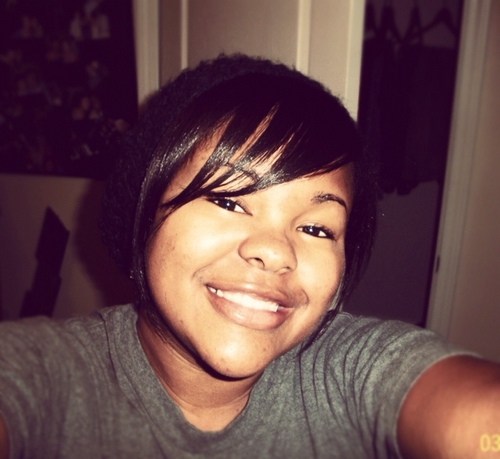
I was born in Winston-Salem in the early autumn of 1986, and immediately became a lover of prose and literature. At a young age, I would delve into my mother's vast book collection (Antony and Cleopatra, Romeo and Juliet, Pride and Prejudice), and a life-changing love affair was formed. I wanted to orchestrate stories like the ones I read, create new realms of thinking, new worlds, involving various types of people. I completed my first novel at 12...and I haven't put the pen down since.
You'll find an array of writing styles - press releases, online exclusives, magazine articles, endorsement letters, suggesting that my interests and career goals surpass literary writing. It has always been my belief that the most important thing about writing is that it should convey the right message, in any fashion that it is presented. For my personal usage, writing has always soothed my soul, has always served as the perfect form of catharsis.
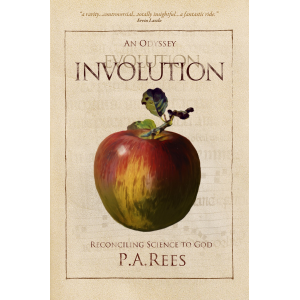
Involution-An Odyssey Reconciling Science to God
Description
<p>“<em>We are not human beings having a spiritual experience; we are spiritual beings having a human experience.”(</em>Teilhard de Chardin<em>)</em></p><p><span style="line-height:1.6em;"><em>Involution-An Odyssey Reconciling Science to God </em> is as layered as a French cassoulet, as diverting, satisfying and as rich. Each reader will spoon this book differently. On the surface it seems to be a simple and light-hearted poetic journey through the history of Western thought, dominantly scientific, but enriched with painting and music. Beneath that surface is the sauce of a new evolutionary idea, involution; the informing of all matter by consciousness, encoded and communicating throughout the natural world. A book about the cathedral of consciousness could have used any language to paint it, but science is perhaps most in need of new vision, and its chronology is already familiar.</span></p><p><span style="line-height:1.6em;">The author offers a bold alternative vision of both science and creation: she suggests that science has been incrementally the recovery of memory, the memory of evolution/involution</span><em style="line-height:1.6em;">.</em></p><p>“<em> Involution proposes that humans carry within them the history of the universe, which is (re)discovered by the individual genius when the time is ripe. All is stored within our DNA and awaits revelation. Such piecemeal revelations set our finite lives in an eternal chain of co-creation and these new leaps of discovery are compared to mystical experience</em>” (From a reviewer)</p><p>Each unique contributor served the collective and universal return to holism and unity. Thus the geniuses of the scientific journey, like the spiritual visionaries alongside, have threaded the rosary of science with the beads of inspiration, and through them returned Man to his spiritual nature and origin.</p><p><span style="line-height:1.6em;">The separation between experience and the rational intellect of science has, by modelling memory as theory, separated its understanding from the consciousness of all, and perceives mind and matter as separate, God and Man as distinct. This work is a dance towards their re-unification: Saints and scientists break the same bread.</span></p><p><span style="line-height:1.6em;">All of time and all the disciplines of science are needed for the evidence. Through swift (and sometimes sparring) Cantos of dialogue between Reason and Soul, Philippa Rees takes the reader on a monumental journey through the history of everything – with the evolution of man as one side of the coin and involution the other. The poetic narrative is augmented by learned and extensive footnotes offering background knowledge which in themselves are fascinating. In effect there are two books, offering a right and left brain approach. The twin spirals of a DNA shaped book intertwine external and internal and find, between them, one journey, Man’s recovery of Himself., and (hopefully) the Creation’s recovery of a nobler Man.</span></p><p><span style="line-height:1.6em;">From the same review “</span><em style="line-height:1.6em;">The reader who finishes the book will not be the same as the one who began it. New ideas will expand the mind but more profoundly, the deep, moving power of the verse will affect the heart.</em></p><p><em>(Marianne Rankin: Director of Communications, Alister Hardy Trust)</em></p><p> </p>
Story Behind The Book
I present this book with a little trepidation. I first wrote this as a result of a long, winding bend of confusion that had lasted almost two years between myself and a person of the opposite sex. Four years ago in the early spring of 2007, I was only twenty-years-old and a junior in college, and my frustration turned into jotting down ideas and feelings in between classes. I was sitting in the parking deck on a particularly warm day in early March, and while I should have been studying my notes for my forthcoming art class, I was reeling from the conversation I'd had with the aforementioned person of the opposite sex. I realized that we'd never work in the way I'd figured in my head. It was equally tragic because we were best friends and we spent a great deal of time with one another. But the disparity of our color and cultural makeup were always glaring us in the face. So, as I sat in my car with my laptop in front of me, and the clock ticking, I began to think: "So what if it did work? What would happen? Would it be easier? And why would it work?" I'm a romantic, and I'm a sucker for happy endings. But I also enjoy realistic dynamics. Please don't read this as an autobiography. Although I am very similar to Natalie Chandler in many ways, my characters are a composite of people I hold very near and dear to my heart. They are my inspiration. Some of them are mentioned below.
Even years later, I still recall writing this novel as being one of the most enjoyable experiences of my life (thus far). It was like my first love in many ways: it was my first completed novel, and anything I've written since, I've unconsciously compared to it. And though my writing has since matured, I still like to read this from time to time and reflect on how inspired and happy I was. After all, I would feel shameful about not putting it out there, when the people mentioned below know it just as well (if not better) than I do. These people helped in my creative process more than they realize. Some stayed up nights with me coming up with titles, names and new ideas, some said that they were similar to the characters. But they all read and listened to me go on and on about it, partially out of love for me and out of genuine love for the book itself.
Without further adieu, this book is dedicated to Dea Sloan, who read my ratty mead notebooks in 10th grade band and thought that they were the best things in the world. To Alonzo Dent, who stayed up with me until sunrise coming up with titles for this book, who answered every single one of my asinine questions. To Princess Valentine, who hated when I gave her random chapters that weren’t in order, who always wanted me to do this. To Kashif Norville, for patiently listening to every single one of my ideas, good or bad, long or short.
I love you all.