About
Robin Lythgoe was born in Maryland, but spent several years in Oregon and did a short stint in upstate New York before moving to Utah. She married an artist, and together they have four wonderful children. Reading and writing have always been a part of her life, and she is particularly drawn to fantasy. Before she managed the art of the pen she dictated her first fiction—a tale about a rabbit—to a scribe (her sister). Her mother often headed up expeditions to the library, from which the entire party invariably returned laden with a stack of books guaranteed to make the arms longer. Robin read everything voraciously, and when she finished her stack, she'd start on her mother's'… and then her sisters'. Today she writes tales about wizards and magic, fantastical places and extraordinary journeys.
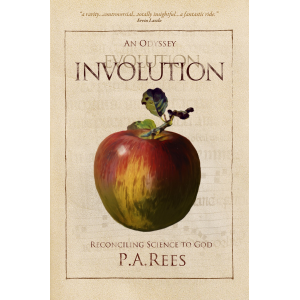
Involution-An Odyssey Reconciling Science to God
Description
<p>“<em>We are not human beings having a spiritual experience; we are spiritual beings having a human experience.”(</em>Teilhard de Chardin<em>)</em></p><p><span style="line-height:1.6em;"><em>Involution-An Odyssey Reconciling Science to God </em> is as layered as a French cassoulet, as diverting, satisfying and as rich. Each reader will spoon this book differently. On the surface it seems to be a simple and light-hearted poetic journey through the history of Western thought, dominantly scientific, but enriched with painting and music. Beneath that surface is the sauce of a new evolutionary idea, involution; the informing of all matter by consciousness, encoded and communicating throughout the natural world. A book about the cathedral of consciousness could have used any language to paint it, but science is perhaps most in need of new vision, and its chronology is already familiar.</span></p><p><span style="line-height:1.6em;">The author offers a bold alternative vision of both science and creation: she suggests that science has been incrementally the recovery of memory, the memory of evolution/involution</span><em style="line-height:1.6em;">.</em></p><p>“<em> Involution proposes that humans carry within them the history of the universe, which is (re)discovered by the individual genius when the time is ripe. All is stored within our DNA and awaits revelation. Such piecemeal revelations set our finite lives in an eternal chain of co-creation and these new leaps of discovery are compared to mystical experience</em>” (From a reviewer)</p><p>Each unique contributor served the collective and universal return to holism and unity. Thus the geniuses of the scientific journey, like the spiritual visionaries alongside, have threaded the rosary of science with the beads of inspiration, and through them returned Man to his spiritual nature and origin.</p><p><span style="line-height:1.6em;">The separation between experience and the rational intellect of science has, by modelling memory as theory, separated its understanding from the consciousness of all, and perceives mind and matter as separate, God and Man as distinct. This work is a dance towards their re-unification: Saints and scientists break the same bread.</span></p><p><span style="line-height:1.6em;">All of time and all the disciplines of science are needed for the evidence. Through swift (and sometimes sparring) Cantos of dialogue between Reason and Soul, Philippa Rees takes the reader on a monumental journey through the history of everything – with the evolution of man as one side of the coin and involution the other. The poetic narrative is augmented by learned and extensive footnotes offering background knowledge which in themselves are fascinating. In effect there are two books, offering a right and left brain approach. The twin spirals of a DNA shaped book intertwine external and internal and find, between them, one journey, Man’s recovery of Himself., and (hopefully) the Creation’s recovery of a nobler Man.</span></p><p><span style="line-height:1.6em;">From the same review “</span><em style="line-height:1.6em;">The reader who finishes the book will not be the same as the one who began it. New ideas will expand the mind but more profoundly, the deep, moving power of the verse will affect the heart.</em></p><p><em>(Marianne Rankin: Director of Communications, Alister Hardy Trust)</em></p><p> </p>
Reviews
<p><span style="color:#333333;font-family:Arial, 'Helvetica Neue', Helvetica, sans-serif;font-size:14px;line-height:20px;">If you love thieves, dragons, and thieves stealing dragons, then you may love As the Crow Flies. The story reminds me of Dresden Files by Jim Butcher in the sense that it's first-person fantasy, but author Robin Lythgoe takes us to another world where the master thief, Crow, is coerced to work alongside the law-man who has dogged him for years. Together they must steal a dragon egg for a wizard or see their loved ones perish. For Crow, "loved ones" of course refers primarily to himself.</span><br /><br /><span style="color:#333333;font-family:Arial, 'Helvetica Neue', Helvetica, sans-serif;font-size:14px;line-height:20px;">Crow and the lawman must weather first each other, second a trek through dangerous lands and a haunted caves and into a temple guarded by blade, sorcery, and an upset dragon broodmother. The banter between the two enemies on their quest kept me smiling throughout the chapters. As we might expect, both men must grow to depend on each other, and Crow grows into a better (and more magical) person, despite his best efforts to stay a self-serving thief.</span><br /><br /><span style="color:#333333;font-family:Arial, 'Helvetica Neue', Helvetica, sans-serif;font-size:14px;line-height:20px;">And let's not forget the thief part. I love a good cloak and purse-cutting dagger, and Crow delivers. He's armed with a silver tongue, sleeping dust, feet that'd make a cat feel ungainly, a razor mind, and a diploma for best-in-class at the school of fine thieving and infiltration (awarded by me). I've read about approximately a billion thieves and even played the vintage first-person-looter games Thief, but Crow still impressed me as a sterling example of skulduggery.</span></p>
<div> </div>
<div><span style="color:#333333;font-family:Arial, 'Helvetica Neue', Helvetica, sans-serif;font-size:14px;line-height:20px;">(AE Marling, author of "Brood of Bones")</span></div>