About
After a 40 year career as a Professor of Psychology, I pondered a question that I had avoided many times, namely, how did I, as a second-generation Chinese American fit in a black and white society in Macon, Georgia where we were the only Chinese in the entire city from the late '20s to early '50s when Jim Crow segregation was yet to be challenged. My attempt to understand how my ethnic identity emerged to my memoir, Southern Fried Rice: Life in A Chinese Laundry in the Deep South. I soon realized from responses of readers and audiences when I gave book talks/signings all over the U. S. that here was an important story to preserve and share. I met other Chinese that also grew up in cultural isolation where they were the only Chinese in their communities and/or they also grew up helping in their parents' laundry, restaurant, or grocery store.
I was inspired to write three additional books, all exploring how Chinese immigrants from the late 1800s until beyond the middle of the past century managed to overcome the hostile societal prejudices against Chinese and other "Orientals" and succeed running family businesses such as laundries, grocery stores, and restaurants.
Writing and speaking about these 4 books led to many important but unanticipated discoveries and contacts with other Chinese Americans. In my fifth book, A Chinese American Odyssey: How a Retired Psychologist Makes a Hit as a Historian, I describe these experiences and discuss some important things I learned about writing, researching, publishing, and publicizing my books.
Description
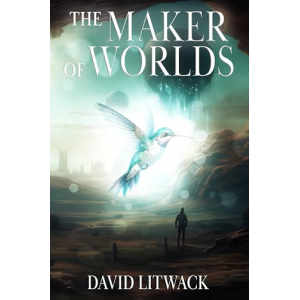
<p style="padding:0px;margin:0px 0px 14px;color:rgb(15,17,17);font-family:'Amazon Ember', Arial, sans-serif;font-size:14px;"><span class="a-text-bold a-text-italic" style="font-weight:700;font-style:italic;">If you had the chance to remake the world, what kind of world would you choose?</span></p><p style="padding:0px;margin:-4px 0px 14px;color:rgb(15,17,17);font-family:'Amazon Ember', Arial, sans-serif;font-size:14px;"><span>When tragedy strikes Lucas Mack's young life, he desperately yearns to escape its sorrow, and takes an improbable leap through the mythical maelstrom. Rather than splashing down on the far side like his neighbors, he's transported to a magical realm where he has the power to redefine not only who he is, but the world in which he resides.</span></p><p style="padding:0px;margin:-4px 0px 14px;color:rgb(15,17,17);font-family:'Amazon Ember', Arial, sans-serif;font-size:14px;"><span>As he stumbles about trying to find his way, he meets Mia, an equally troubled fellow pilgrim. With the help of a mystical guide and an aging wizard, they navigate the enchanted land while learning to control their newfound powers. Yet this realm is more complex than they expected, with seasoned sorcerers who've been corrupted by the sinister side of magic.</span></p><p style="padding:0px;margin:-4px 0px 14px;color:rgb(15,17,17);font-family:'Amazon Ember', Arial, sans-serif;font-size:14px;"><span>Limited by natural law and seduced by magic's power, they are tested as never before. Will the gift of magic bring renewed hope or drive them to the edge of the void?</span></p>
Story Behind The Book
A Chinese American Odyssey is a memoir that describes the discoveries, many unexpected, when a Chinese American psychology professor retires and reinvents himself as a public historian of the Chinese in America.
Author of four books on the social history of Chinese family-run businesses, he has given dozens of lectures around the country. A Chinese American Odyssey provides a fascinating and insightful behind-the-scenes look at the processes involved in researching, writing, publishing, and promoting books. Writers of books on any topic will find useful information.