About
I am a retired residential/commercial painting contractor. Twenty years ago we moved from a busy city to the middle of a cornfield in a sparsely settled rural township and love it. Professional sports bore me, and no wonder; none of my (former) hometown teams – baseball, football, or basketball – has won a national championship since 1964. I’d rather read a book.
The only subjects that interest me are those you're not supposed to talk about in public: religion and politics. That leaves weather.
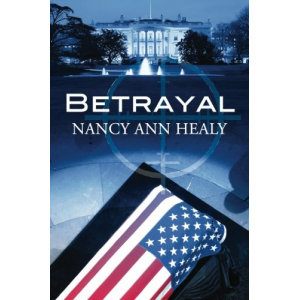
Betrayal (Alex and Cassidy) (Volume 2)
Description
<p>There is no one to trust in Nancy Ann Healy’s thrilling new novel, <i>Betrayal</i>.</p><p>FBI agent Alex Toles is relieved to return to work at the NSA after a frightening on-the-job ordeal. Her life partner, Cassidy O’Brien, and Cassidy’s seven-year-old son, have also been instrumental in healing Alex’s wounds.</p><p>But their peace is short-lived when they discover that their good friend—and President of the United States—John Merrow, has been assassinated.</p><p>Little do they know, however, that President Merrow’s death is just the beginning. Even as Alex and Cassidy are forced to confront the loss of their friend and the ramifications that will have on the global stage, they must cope with problems much closer to home.</p><p>Battling intolerance over the nature of their romantic relationship and long-hidden secrets within their families, Alex and Cassidy must confront the truth of their pasts in order to build the future they seek.</p><p>On top of it all, they must confront a conspiracy that spans multiple governments, intelligence agencies, diplomatic services, and international corporations if they are to finally discover the truth about the mysterious group known as the Collaborative—and about themselves.</p>
Story Behind The Book
Summaries of novels can be found in multiple volume sets in most public libraries in the U.S. and in a confusing array of formats on the internet. Many high school and college libraries have study guides available that provide brief synopsis of novels modern and classic. And at colleges and universities, papers are available written by scholars adept at analyzing and critiquing novels and their authors.
None of these sources, however, as far as I can determine, treat classic novels of the late 18th century through the early 20th century as they are treated in Fifty Classic Novel Summaries. It stands alone.
It is my hope that the summaries will encourage readers to learn to love reading classic literature. A companion volume to Fifty Classic Novel Summaries is planned, which will feature fifty additional summaries.