


- Author
- Book
- Story behind the book
- Media Links
- Reviews

emma browna
About
How CoinMinutes Elevates Crypto Awareness Across Generations
Crypto doesn't land the same way twice.
Your niece downloads the app without blinking. Your parents suspect a scam. Your grandparents don't see why cash needed replacing in the first place.
Every generation carries different financial wounds, different comfort with technology, different definitions of "risky." These aren't quirks — they're deeply wired frameworks built over decades.
Most crypto education ignores all of that. Same jargon, same assumptions, handed to a 19-year-old and a 72-year-old like the gap between them is irrelevant.
At Coinminutes Crypto, your age isn't an obstacle. It's where we start.
Understanding Generational Gaps in Crypto Awareness
Different Starting Lines
Gen Z: These folks grew up with smartphones glued to their hands. Venmo feels as normal as breathing. Their crypto challenge isn't understanding digital payments - it's learning that losing your password means losing your money forever.
Millennials: They remember dial-up internet but adapted to smartphones pretty well. They've lived through enough financial disasters to be cautious. They want to understand crypto but they're not jumping in blind.
Gen X: The dot-com crash burned them. They remember when putting your credit card info online seemed crazy. They need serious proof that crypto isn't just another tech bubble about to pop.
Boomers: Many still write checks and keep cash in coffee cans. They need to understand what digital money even is before you can explain Bitcoin.
None of this is meant to stereotype anyone. Just acknowledging where people tend to start from.
Common Obstacles for Every Age Group
Some crypto fears cross all generations:
Everyone's terrified of losing money to hackers. Everyone finds blockchain confusing at first. Everyone's heard nightmare stories about people losing fortunes because they forgot a password or clicked the wrong link.
The difference? Younger folks might pretend they understand when they don't. Older folks will straight-up tell you they're confused and want clearer explanations.
Both reactions are totally valid.
Tailoring Learning to Fit Every Generation
Visual Content for the Scroll Generation
Younger users learn differently. They're used to getting information from TikToks and Instagram stories. Long articles put them to sleep faster than a lecture on tax law.
We make visual content that actually teaches:
Three-minute videos that cover one topic at a time. "What's a crypto wallet?" gets its own video. "How does Bitcoin work?" gets another. Each video uses animations that turn abstract concepts into something you can actually picture.
Interactive graphics let users click through processes step by step. Want to understand how a blockchain transaction works? Click through it and watch it happen in real time.
Our "Crypto in 60 Seconds" series breaks down complex stuff into bite-sized pieces. The Bitcoin video has been shared thousands of times because it actually makes sense.
In-Depth Guides & Step-by-Step Tutorials for Cautious Learners
Older generations don't want the cliff notes version. They want to understand something completely before they risk any money on it. Rushing them backfires every time.
We create comprehensive guides that don't assume you know anything about crypto going in. Twenty-page PDFs that explain everything from scratch. Glossaries that define every technical term. Security tutorials that show exactly how to protect your investments.
We don't sugarcoat risks or make crazy promises about getting rich quick. If crypto can lose value (and it can), we say so clearly.
One reader told us: "I'm 67 and your beginner guide helped me understand Bitcoin better than my grandson's explanations. Having everything written down clearly made all the difference."
That's exactly what we're going for.
Spotlight on Shared Experiences
Family Stories and Bridging the Generation Gap
Cryptocurrency creates weird family dynamics. Kids want to invest everything in dogecoin. Parents freak out about scams they've read about. Grandparents don't understand why anyone needs fake internet money.
We share real family crypto stories to show it doesn't have to be a fight.
One family we featured spans three generations learning crypto together. Grandma started by understanding digital payments. Mom focused on retirement planning with crypto. Daughter explored more advanced stuff. Each person learned at their own pace without judgment.
Another story showed parents and kids becoming learning partners. Parents brought financial wisdom. Kids handled the technical setup. Both sides contributed something valuable.
These stories prove crypto can bring families together instead of driving them apart.
Encouraging Mixed-Age Participation
Our forums mix generations on purpose. Young users help with technical questions. Older users share financial experience and common-sense perspective.
We have sections for beginner questions where everyone's welcome, family crypto discussions, security tips, and success stories. Moderators shut down age-related mockery fast. Everyone's questions get treated with respect.
It works. Different perspectives make everyone smarter about crypto.
Creating Safe, Friendly Spaces for All Ages
Different generations face different crypto risks.
Younger users need protection from FOMO and social media scams. We teach them to think critically about crypto influencers making ridiculous promises.
Older users need protection from technical confusion and phone scams targeting seniors. We provide security checklists and warning signs of common fraud.
Everyone needs honest information about crypto risks. No hype. No promises of easy money.
Our community rules are simple: no investment advice disguised as education, no pressure to buy specific coins, no ageist comments, no sharing personal wallet info, and no promotion of sketchy investment schemes.
Keeping Crypto Learning Relevant as Times Change
Crypto changes fast. What seemed important six months ago might be totally irrelevant today.
Basic blockchain concepts stay pretty stable. Those form the foundation that doesn't need constant updates. But current events, new regulations, and technology changes need regular coverage.
We adjust our content as generations evolve too. Gen Z is getting older and taking on more financial responsibility, so they need different content than they did five years ago. Boomers are getting more comfortable with digital tools, so they can handle more advanced topics.
User feedback drives most changes. When people tell us they need more tax information or simpler explanations of new concepts, we listen and adapt.
Conclusion
A 20-year-old and a 70-year-old don't just think about crypto differently. They think about money differently. Fundamentally. Neither is wrong.
Both deserve education that actually fits.
inutes offers multiple pathways to the same knowledge, because the destination shouldn't dictate the route. Visual learners get videos and graphics. The detail-obsessed get deep-dive guides. Those who think best in the community get exactly that.
Here's what nobody talks about enough: when families learn together, each through their preferred method, something unexpected happens. The 20-year-old's instincts meet the 70-year-old's hard-won financial wisdom. Everyone sharpens.
Crypto goes mainstream the moment education stops excluding people. That moment starts with meeting every learner exactly where they are.
Find More Information:
Decoding Crypto Market Trends: The Coinminutes Verification Process
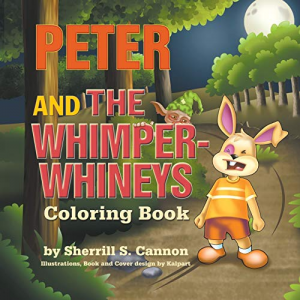
Peter and the Whimper Whineys Coloring Book
0.0
0 ratings
Description
<p><span style="color:rgb(24,24,24);font-family:Merriweather, Georgia, serif;font-size:14px;">This coloring book version of the best-selling “whine-stopper” children’s story was designed for kids to enjoy reading the rhyming, as well as being able to illustrate their own version of Peter’s nocturnal adventure into the woods.</span><br style="color:rgb(24,24,24);font-family:Merriweather, Georgia, serif;font-size:14px;" /><br style="color:rgb(24,24,24);font-family:Merriweather, Georgia, serif;font-size:14px;" /><span style="color:rgb(24,24,24);font-family:Merriweather, Georgia, serif;font-size:14px;">Peter’s mother warns him that if he doesn’t stop whining and crying, he’ll have to go live with the Whimper-Whineys. His adventure continues as he later hops into the woods and finds lots of frightening Whimper-Whineymen! He discovers that the Whimper-Whineys are very ill-mannered and rude, and that everything is sour in Whimper-Whineland. He decides his mother was right. If only he can get back home!</span><br style="color:rgb(24,24,24);font-family:Merriweather, Georgia, serif;font-size:14px;" /><br style="color:rgb(24,24,24);font-family:Merriweather, Georgia, serif;font-size:14px;" /><span style="color:rgb(24,24,24);font-family:Merriweather, Georgia, serif;font-size:14px;">According to a recent critique, “I cannot imagine any parent or guardian not wanting to read this book to their child! ... Parents everywhere applaud you!”</span></p>