Karen Gonzalez

Karen Gonzalez

About

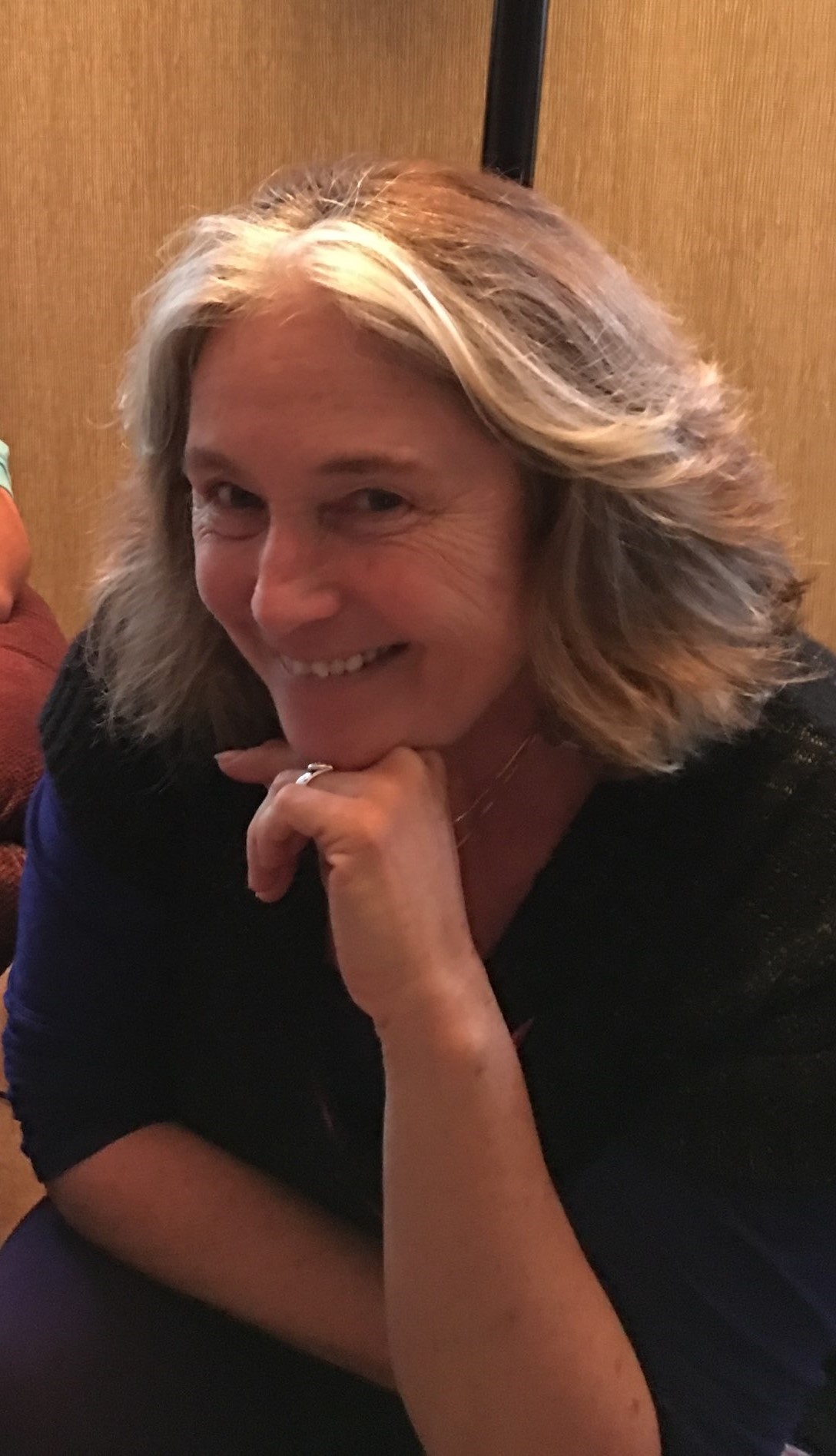
Karen has been interested in folktales and folklore for more than three decades and has facilitated writing classes and workshops for more than twenty years .

Her poetry chapbooks include True North (Origami Poems Project), Coyote in the Basket of My Ribs (Kelsay Books) and forthcoming Down River with Li Po (Black Cat Poetry Press).

An award-winning fiction, poetry, and nonfiction writer, she has earned awards from Farmhouse Magazine, National League of American Pen Women, California Writers Association, and has been nominated for both the Pushcart Prize and Best of the Net.

Her work has appeared in The San Francisco Chronicle, North Bay Biz Journal, Australian Trade Community Journal, Verde, Potato Soup Journal, Sonoma Mandala, Big Blend Magazine, and Twisted in Time, Visual Verse, Zahir Tales as well as other magazines and newspapers.

She earned her Bachelor of Arts degrees in Creative Writing and Anthropological Linguistics/Folklore from Sonoma State University in California, and her folklore research credits include “Sonoma County Scarecrows: Scarecrows as Folk Art,” which was presented to the California Folklore Society.

She is also an assemblage artist who was National Arts Program Featured Artist in 2022. Her work has appeared on the cover of several literary magazines and been displayed in several art galleries.

She lives in Northern California.


Size Zero (Visage Book 1)

Size Zero (Visage Book 1)

0.0
0 ratings

Description

<p style="margin:0px 0px 14px;padding:0px;font-family:Arial, sans-serif;font-size:14px;"><strong>&quot;A somber, disturbing mystery fused with a scathing look at the fashion industry. </strong><strong>Mangin writes in a confident, razor-edged style.&quot;</strong><strong> - Kirkus Reviews</strong></p><p style="margin:-4px 0px 14px;padding:0px;font-family:Arial, sans-serif;font-size:14px;"><strong>Condom dresses and space helmets have debuted on fashion runways.</strong></p><p style="margin:-4px 0px 14px;padding:0px;font-family:Arial, sans-serif;font-size:14px;">A dead body becomes the trend when a coat made of human skin saunters down fashion's biggest stage. The body is identified as Annabelle Leigh, the teenager who famously disappeared over a decade ago from her boyfriend's New York City mansion.</p><p style="margin:-4px 0px 14px;padding:0px;font-family:Arial, sans-serif;font-size:14px;">This new evidence casts suspicion back on the former boyfriend, Cecil LeClaire. Now a monk, he is forced to return to his dark and absurd childhood home to clear his name. He teams up with Ava Germaine, a renegade ex-model. And together, they investigate the depraved and lawless modeling industry behind Cecil's family fortune.</p><p style="margin:-4px 0px 14px;padding:0px;font-family:Arial, sans-serif;font-size:14px;">They find erotic canes, pet rats living in crystal castles, and dresses made of crushed butterfly wings. But Cecil finds more truth in the luxury goods than in the people themselves. Everyone he meets seems to be wearing a person-suit. Terrified of showing their true selves, the glitterati put on flamboyant public personas to make money and friends. Can Cecil find truth in a world built on lies?</p><p style="margin:-4px 0px 0px;padding:0px;font-family:Arial, sans-serif;font-size:14px;"><strong>In high fashion modeling, selling bodies is organized crime.</strong></p>

Story Behind The Book

Originally, folktales were stories created by ordinary people to be passed on orally from one generation to the next. Over time, with the advent of printing and later the Internet, oral tradition has rapidly been replaced by our ability to collect and store the in- formation electronically (e.g., blogs, Web sites, digital media like CDs) or in books, including scrapbooks, workbooks and journals. The difference between researching and recording accurate family histories and writing folktales is that the folk teller (the writer) recounting folktales can focus upon his or her own memories. These rather than genealogy are the stuff of folktales.

Reviews

<p>“I found the idea of people writing their<br /> own family folk tales intriguing. Once I<br /> started to the read the book, I could see all<br /> sorts of uses for it. The workbook is laid out<br /> in a very simple, easy to follow and easy to<br /> understand manner, and gives the reader<br /> the confidence needed to write. The<br /> suggestions for getting started, using people,<br /> places or things, is just a super idea. I can see<br /> this bringing families together and helping<br /> anyone interesting in writing, getting a good<br /> start. If I had young children, I would<br /> definitely start them on a regular routine of<br /> writing, using this book as a guideline.<br /> The exercises are imaginative, and get<br /> you down to work right away. A lot of<br /> thought has gone into the exercises and the<br /> whole process of writing. The author<br /> cautions against over-thinking and reminds<br /> you of what a folktale is. She even touches<br /> on the possibility of family members seeing<br /> ii<br /> things differently, and how to handle that<br /> eventuality. I can see many people adopting<br /> this as a relaxation technique and I love the<br /> idea of combining it with scrap booking.<br /> What a great way to revitalize what<br /> we have lost, our oral family history!”<br /> Nancy Reid, Big Blend Magazine<br /> (www.bigblendmagazine.com)</p>