About
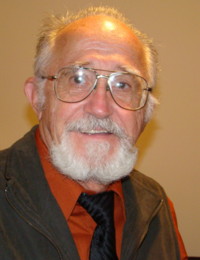
I'm a three times retiree: Air Force master sergeant , businessman, restaurateur, agnostic seventy-one-year-old dyslexic writer, who hopes to retire again in fifteen or twenty years, if my highly religious Greek Orthodox, Russian wife doesn't lay me to rest before then. Like most writers, my life experiences are what inspired me to write. I had been writing for about twelve years when I learned I was a dyslexic. I was so relieved; now I had an excuse for my slow reading and terrible spelling, and I wanted to tell all that I wasn’t really stupid and lazy. My self-published novel, RUNT, MEMORIES OF A DYSLEXIC BASTARD, tells my story. NU-DEL, DAUGHTER OF THE FOREST, is my second novel. I live in Milton, FL. My published works:
Peter and the Whimper-Whineys
Description
<span style="line-height:115%;font-family:Calibri, 'sans-serif';font-size:11pt;"><span style="font-family:Calibri;">Peter and the Whimper-Whineys is about a small rabbit who whines all the time. His mother cautions him that if he keeps on whining and crying, he’ll have to go live with the Whimper-Whineys. One night Peter hops into the dark forest.<span> </span>He meets some Whimper-Whineymen and discovers that not only do the Whimper-Whineys whine all the time, but they are very ill-mannered and rude. He discovers that everything is sour in Whimper-Whineyland and decides his mother was right! If only he can get back home… a recent critique, “Though there are other books out there for children about whining, I cannot imagine any parent or guardian not wanting to read this book to their child!... <span> </span>Parents everywhere applaud you!” </span></span>
Story Behind The Book
When I started writing RUNT, it was going to be a story about an abused mountain boy during the WWII era when child abuse, whether physical or emotional, was a simple and approved method of correcting or bring up your children. In fact, I felt as a child that if I wasn’t screamed at, cussed, whipped or walloped upside the head when I did something wrong, or in some cases didn’t do something, my parents didn’t love me. It was during my research process that I learned I was dyslexic. I had spent a lifetime thinking my slow reading and atrocious spelling and writing skills were attributed to my lack of ability to get the basics of these things down when I was a child. I didn’t like going to school and took every opportunity that came along to not go. Besides, education didn’t seem to be of much importance to my parents; out of seven of us, only one made it through high school.