Paul Owen

Paul Owen

About

For the past 22 years Paul Owen has been involved in research and development focusing on artificial intelligence software language development.

During this time he has coheaded a group of programmers and scientists that have made significant developments in artificial intelligence (AI) software.

To demonstrate the advanced abilities of the AI software, Dean’s Law Dictionary was created as the first true example of how an “artificial person” could be created and be able to think as good or better than humans.

Dean’s Law Dictionary is simply the output of an “artificial person” defining all words used in all legal cases. The command is extremely simple: “Define all words used in all legal cases.” We input a large database of cases into the program and it defines all the words as they are used precisely in those cases. It excels extremely well at defining idiomatic concepts of the law. The only human interface is used for product layout and limitation of the scope of the work product.

If you want, you can go to the website for Dean’s (www.deanslawdictionary.com) and download a copy of the dictionary. It is free to use for 3 days. Look at the complexity of its definitions for such difficult idiomatic terms such as nuisance, felony murder, insanity, proximate cause, mens rea, and negligence. If you happen to have a copy of Black’s Law Dictionary, the alleged premier law dictionary, please open it and compare our AI work product to their human work product. All of our definitions and sub-definitions are case excerpts, which define the complex idiomatic terms. All of them were discovered by the AI “artificial person.”

Recently, Paul has been focusing on deployment of complex problem solving and predictive trend modeling applications. These results have created programs and models to solve many of the complex problems facing our society today. The solutions for health care, and the banking crisis are amazing simple and easy to implement even with the vast corruption present  in our current form of government.

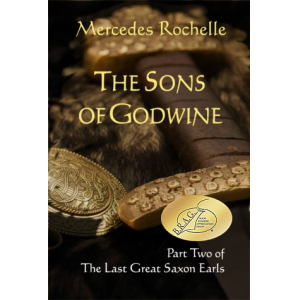
The Sons of Godwine: Part Two of The Last Great Saxon Earls

The Sons of Godwine: Part Two of The Last Great Saxon Earls

0.0
0 ratings

Description

<p>Emerging from the long shadow cast by his formidable father, Harold Godwineson showed himself to be a worthy successor to the Earldom of Wessex. In the following twelve years, he became the King's most trusted advisor, practically taking the reins of government into his own hands. And on Edward the Confessor's death, Harold Godwineson mounted the throne—the first king of England not of royal blood. Yet Harold was only a man, and his rise in fortune was not blameless. Like any person aspiring to power, he made choices he wasn't particularly proud of. Unfortunately, those closest to him sometimes paid the price of his fame.<br /><br />This is a story of Godwine's family as told from the viewpoint of Harold and his younger brothers. Queen Editha, known for her Vita Ædwardi Regis, originally commissioned a work to memorialize the deeds of her family, but after the Conquest historians tell us she abandoned this project and concentrated on her husband, the less dangerous subject. In THE SONS OF GODWINE and FATAL RIVALRY, I am telling the story as it might have survived had she collected and passed on the memoirs of her tragic brothers.<br /><br />This book is part two of The Last Great Saxon Earls series. Book one, GODWINE KINGMAKER, depicted the rise and fall of the first Earl of Wessex who came to power under Canute and rose to preeminence at the beginning of Edward the Confessor's reign. Unfortunately, Godwine's misguided efforts to champion his eldest son Swegn recoiled on the whole family, contributing to their outlawry and Queen Editha's disgrace. Their exile only lasted one year and they returned victorious to London, though it was obvious that Harold's career was just beginning as his father's journey was coming to an end.<br /><br />Harold's siblings were all overshadowed by their famous brother; in their memoirs we see remarks tinged sometimes with admiration, sometimes with skepticism, and in Tostig's case, with jealousy. We see a Harold who is ambitious, self-assured, sometimes egocentric, imperfect, yet heroic. His own story is all about Harold, but his brothers see things a little differently. Throughout, their observations are purely subjective, and witnessing events through their eyes gives us an insider’s perspective.<br /><br />Harold was his mother's favorite, confident enough to rise above petty sibling rivalry but Tostig, next in line, was not so lucky. Harold would have been surprised by Tostig's vindictiveness, if he had ever given his brother a second thought. And that was the problem. Tostig's love/hate relationship with Harold would eventually destroy everything they worked for, leaving the country open to foreign conquest. This subplot comes to a crisis in book three of the series, FATAL RIVALRY.</p>

Story Behind The Book

Ever wonder about any of the following? Why is it so hard to find a good job, mind your own business, and make a decent living? Why does nothing work from our education institutions to our government? Why can't we really fix health care, or social security? Why can't we stop deficit spending? Why does everyone in a position of leadership always lie to us and talk down to us? The short answer: We are no longer a Democratic Republic. We are rapidly transitioning to National Socialism. This process has been going on for a good deal of time since 1913 and recently it has picked up a tremendous momentum. If you ever wonder how all this could have happened and who destroyed our great country, it all began with the collapse of the Judiciary. In their arrogance, they passed laws from the bench which destroyed the Free Press, and our once great school system. You can read all about it in Paul Owen's The Rise of National Socialism Part 1: Judicial Tyranny The Rise of National Socialism will give you a solid foundation and understanding on the fundamentals of judicial decision making. It objectively classifies the process of legislation from the bench and shows you a number of fundamental and important cases and discusses them and explains why they are legislation from the bench and why this process is so dangerous.

Reviews