About
Dennis Garlick received his Ph.D. in psychology from the University of Sydney in 2003. His Ph.D. focused on using the recent advances in the brain sciences to provide a new approach to explaining human intelligence. This approach was accepted for publication in The Psychological Review, often considered to be the most prestigious peer-reviewed psychology journal in the world. This publication led to the American Psychological Association and American Psychological Society issuing press releases publicizing this work, indicating its importance to the general public. More recently, the famous scientific journal Nature published a report confirming the validity of this approach for explaining IQ and human intelligence.
Dr. Garlick is currently a postdoctoral researcher in the Department of Psychology at the University of California, Los Angeles.
Description
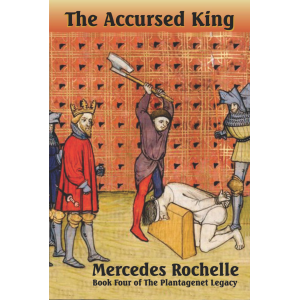
<p><span style="color:rgb(15,17,17);font-family:'Amazon Ember', Arial, sans-serif;font-size:14px;">What happens when a king loses his prowess? The day Henry IV could finally declare he had vanquished his enemies, he threw it all away with an infamous deed. No English king had executed an archbishop before. And divine judgment was quick to follow. Many thought he was struck with leprosy—God's greatest punishment for sinners. From that point on, Henry's health was cursed and he fought doggedly on as his body continued to betray him—reducing this once great warrior to an invalid. Fortunately for England, his heir was ready and eager to take over. But Henry wasn't willing to relinquish what he had worked so hard to preserve. No one was going to take away his royal prerogative—not even Prince Hal. But Henry didn't count on Hal's dauntless nature, which threatened to tear the royal family apart.</span></p>
Story Behind The Book
In this book, I challenge some of the fundamental assumptions that psychologists make about intelligence. By rejecting these assumptions, I show how findings from psychology and recent brain science can be used to provide a new explanation of human intelligence. This explanation has important implications for childhood education, as well as understanding just how our brains work.
Reviews
<p><strong>“<em>Intelligence and the Brain</em> is a fascinating and important work that offers new information about intelligence and, just as important, makes it available to the public at large in a digestible form. Dennis Garlick’s extremely well-written book will provide much to ponder for experts and for anyone with an interest in the latest research on intelligence and genius.”</strong><br />—Barry Silverstein, ForeWord Reviews<br /><br /><strong>“In this highly readable yet scientifically grounded book, Garlick takes the increasingly complex notion of intelligence and makes it simple again—directly relating the concept to the questions that most concern us as students, parents, and educators.”<br /></strong>—James W. Stigler, Professor of Psychology, University of California, Los Angeles<br /><br /><strong>“If you are curious about IQ, this book is for you. It has everything that you wanted to know about IQ, but were afraid to ask.”</strong> <br />—Terrence J. Sejnowski, Francis Crick Professor, Salk Institute of Biological Sciences </p>