About
I've done a lot of different things in my life, all of them creative. I've been an illustrator, trophy designer, graphic artist, programmer, multimedia developer, webmaster, and author.
I love science, as well as science fiction, fantasy, and other speculative fiction. I'm a rabid Joss Whedon fan, I'm crazy about greyhounds, and I collect moose.
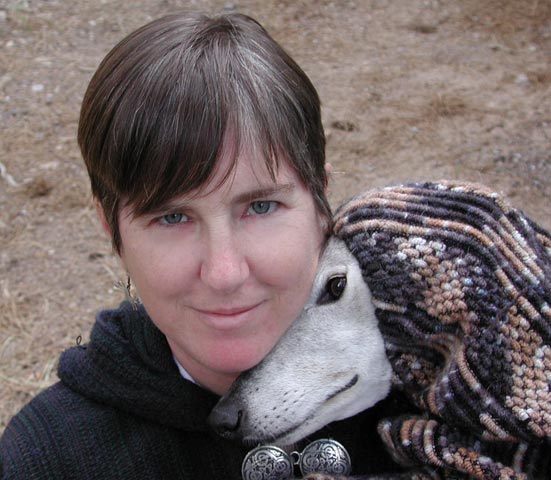
I participate in Renaissance faires throughout the southwest United States, promoting adoption of retired racing greyhounds with Greyhounds of Fairhaven, a non-profit organization I founded several years ago.
I live in Scottsdale, Arizona, with my wonderful husband, a pack of retired racing greyhounds, and an ancient, three-legged demon in a cat suit.
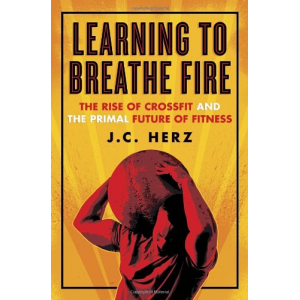
Learning to Breathe Fire: The Rise of CrossFit and the Primal Future of Fitness
Description
<p><b>The absorbing, definitive account of CrossFit's origins, its explosive grassroots growth, and its emergence as a global phenomenon.</b><br /> <br />One of the most illuminating books ever on a sports subculture, <i>Learning to Breathe Fire </i>combines vivid sports writing with a thoughtful meditation on what it means to be human. In the book, veteran journalist J.C. Herz explains the science of maximum effort, why the modern gym fails an obese society, and the psychic rewards of ending up on the floor feeling as though you're about to die. <br /> <br />The story traces CrossFit’s rise, from a single underground gym in Santa Cruz to its adoption as the workout of choice for elite special forces, firefighters and cops, to its popularity as the go-to fitness routine for regular Joes and Janes. Especially riveting is Herz’s description of The CrossFit Games, which begin as an informal throw-down on a California ranch and evolve into a televised global proving ground for the fittest men and women on Earth, as well as hundreds of thousands of lesser mortals. <br /> <br />In her portrayal of the sport's star athletes, its passionate coaches and its “chief armorer,” Rogue Fitness, Herz powerfully evokes the uniqueness of a fitness culture that cultivates primal fierceness in average people. And in the shared ordeal of an all-consuming workout, she unearths the ritual intensity that's been with us since humans invented sports, showing us how, on a deep level, we're all tribal hunters and first responders, waiting for the signal to go all-out. </p>
Story Behind The Book
My inspiration for The Silver Cage was twofold. One of my favorite fantasy authors is Katherine Kurtz. Her novels inspired me to try writing books of my own. They also taught me the importance of having a logical magic system in a fantasy story. Rather than just having some intangible force called “magic,” there needs to be a source of the power and some kind of rules that the characters have to follow to use that power. That idea was one of the driving forces behind The Silver Cage.
The other inspiration was my desire to write a modern fairy tale that could be enjoyed by adults whether they were fans of fantasy fiction or not. By ‘fairy tale,’ I don’t mean the traditional, short folk tales written for children. Instead, I use the term as defined by Lord of the Rings author J.R.R. Tolkien in his essay ‘On Fairy-Stories.’ Tolkien said that fairy tales are not stories about fairies or other fantastic creatures; rather they are about the interaction between humans and such beings.
David Conner, a sensible, modern-day businessman, is the human who interacts with the fantastic creatures of The Silver Cage. He acts as a guide for the reader as he explores the magical world he finds himself in, investigates how and why he ended up there, and uncovers the layers of intrigue that surround the lives of the world’s creatures.