Steven Atwood

Steven Atwood

About

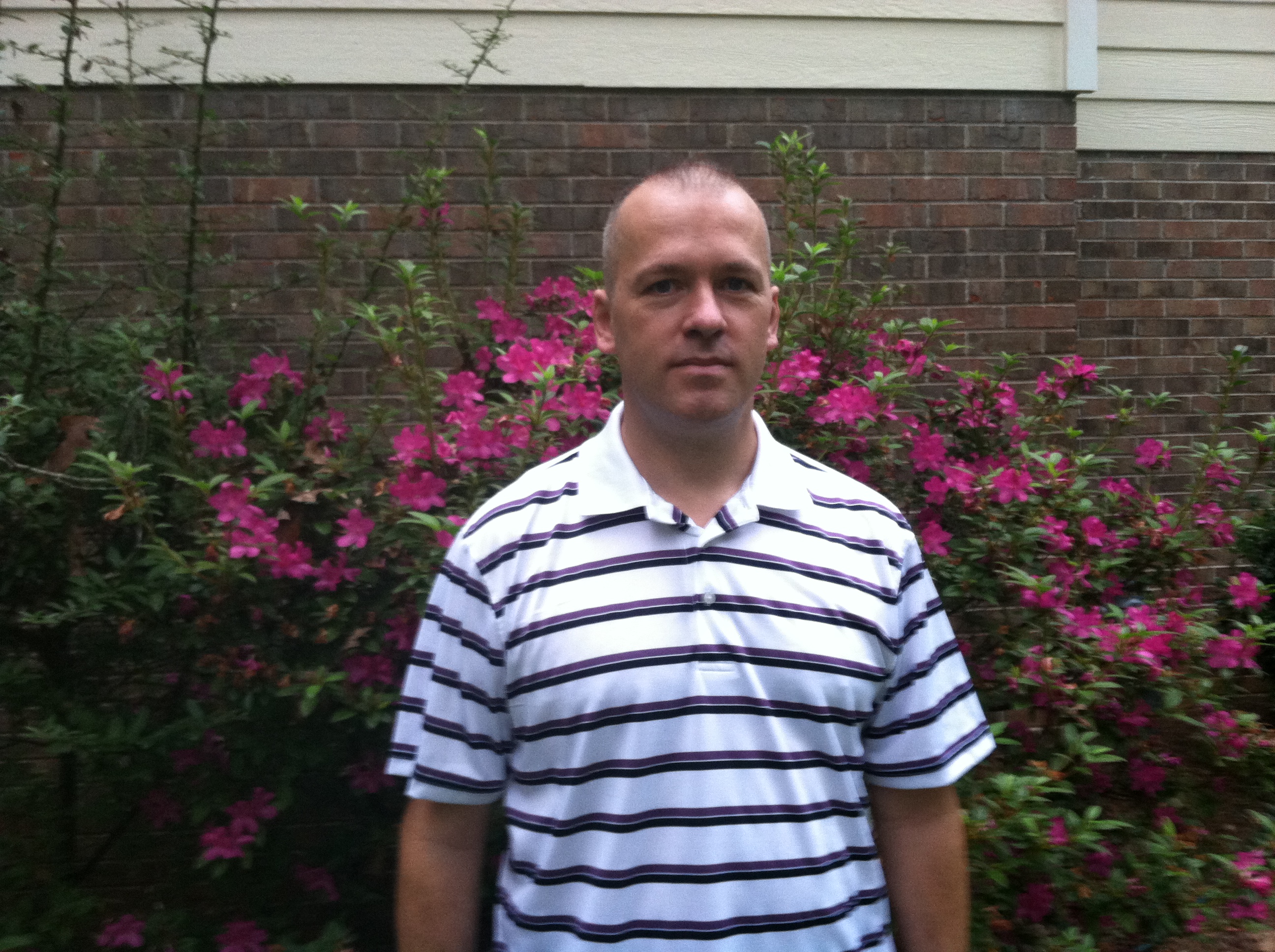
My life had its ups and downs, like most people. Along the way, I met my beautiful wife who saved me. I was in the darkest part of my life at the time, practically lived in seclusion even though I had a roommate. I smoked, drank very heavily, believed everyone owed me something, and I had a dead end job. My life was spiraling into the abyss, until I met her. To make a long story short, she reached into a bucket of sludge, picked me up, hosed me off, and married me. She never asked me to change, but her example and my love for her made it my priority.

We have three wonderful children and we reside in the great state of Georgia. After a few years, I will be at home with kids writing, while my wife is starting her career. My loving wife supported me for years in the Army and soon it will be my turn to support her dreams.

Why do you write? I just really enjoy writing. I love the idea of telling stories and I want them to have some meaning. How often do we see movies or read books that makes your IQ drop when you’re done? I think a good story should make you think or encourage you to reflect, but this should never take away from a great story.

What do you write? The premise is that no matter long ago in the past or how far into the future, the human problems will always remain the same. Books and short stories should push the envelope bringing them in, placing them side by side with hero while fighting the villain.

Why do I write science fiction? First of all, I love this genre. I grew watching Battlestar Galactica and reading Doctor Who books. My thirst for more wondrous, seemingly impossible, stories only grew as the years went by.  My science fiction stories are high tech, dystopian, apocalyptic (no zombies), and space operas with a twist. I also add in plenty of adventure and plenty of surprises. In science fiction anything goes.
Involution-An Odyssey Reconciling Science to God

Involution-An Odyssey Reconciling Science to God

0.0
0 ratings

Description

<p>“<em>We are not human beings having a spiritual experience; we are spiritual beings having a human experience.”(</em>Teilhard de Chardin<em>)</em></p><p><span style="line-height:1.6em;"><em>Involution-An Odyssey Reconciling Science to God </em> is as layered as a French cassoulet, as diverting, satisfying and as rich. Each reader will spoon this book differently. On the surface it seems to be a simple and light-hearted poetic journey through the history of Western thought, dominantly scientific, but enriched with painting and music. Beneath that surface is the sauce of a new evolutionary idea, involution; the informing of all matter by consciousness, encoded and communicating throughout the natural world. A book about the cathedral of consciousness could have used any language to paint it, but science is perhaps most in need of new vision, and its chronology is already familiar.</span></p><p><span style="line-height:1.6em;">The author offers a bold alternative vision of both science and creation: she suggests that science has been incrementally the recovery of memory, the memory of evolution/involution</span><em style="line-height:1.6em;">.</em></p><p>“<em> Involution proposes that humans carry within them the history of the universe, which is (re)discovered by the individual genius when the time is ripe. All is stored within our DNA and awaits revelation. Such piecemeal revelations set our finite lives in an eternal chain of co-creation and these new leaps of discovery are compared to mystical experience</em>” (From a reviewer)</p><p>Each unique contributor served the collective and universal return to holism and unity. Thus the geniuses of the scientific journey, like the spiritual visionaries alongside, have threaded the rosary of science with the beads of inspiration, and through them returned Man to his spiritual nature and origin.</p><p><span style="line-height:1.6em;">The separation between experience and the rational intellect of science has, by modelling memory as theory, separated its understanding from the consciousness of all, and perceives mind and matter as separate, God and Man as distinct. This work is a dance towards their re-unification: Saints and scientists break the same bread.</span></p><p><span style="line-height:1.6em;">All of time and all the disciplines of science are needed for the evidence. Through swift (and sometimes sparring) Cantos of dialogue between Reason and Soul, Philippa Rees takes the reader on a monumental journey through the history of everything – with the evolution of man as one side of the coin and involution the other.  The poetic narrative is augmented by learned and extensive footnotes offering background knowledge which in themselves are fascinating. In effect there are two books, offering a right and left brain approach. The twin spirals of a DNA shaped book intertwine external and internal and find, between them, one journey, Man’s recovery of Himself., and (hopefully) the Creation’s recovery of a nobler Man.</span></p><p><span style="line-height:1.6em;">From the same review “</span><em style="line-height:1.6em;">The reader who finishes the book will not be the same as the one who began it. New ideas will expand the mind but more profoundly, the deep, moving power of the verse will affect the heart.</em></p><p><em>(Marianne Rankin: Director of Communications, Alister Hardy Trust)</em></p><p> </p>

Story Behind The Book

Reviews